
The New Architecture of Asian Cricket: Format, Market and the Balance of Power
एशियाई क्रिकेट इस समय तीन अलग गति से चल रहे तंत्रों के बीच संरचनात्मक पुनर्गठन के दौर से गुजर रहा है — खेल-तकनीकी (टेस्ट क्रिकेट का सिकुड़ता आधार), वाणिज्यिक (आईपीएल केंद्रित फ्रैंचाइज़ी अर्थव्यवस्था) और प्रशासनिक (आईसीसी-एसीसी ढांचे में राजस्व और प्रभाव का असंतुलन)। मुख्य निष्कर्ष: एशिया में प्रतिस्पर्धा बढ़ रही है लेकिन उसका आधार संकीर्ण हो रहा है, क्योंकि लीग निवेश तेज़ है जबकि घरेलू प्रतिभा-आपूर्ति प्रणाली में निवेश अपर्याप्त है। सबसे बड़ा जोखिम तेज़ गेंदबाज़ों का वर्कलोड, वरिष्ठ खिलाड़ियों का एक साथ संक्रमण, और टेस्ट क्रिकेट के कैलेंडर का लगातार सिकुड़ना है। निर्णायक प्रश्न यह नहीं कि अगला खिताब कौन जीतेगा, बल्कि यह कि एशियाई बोर्ड घरेलू प्रथम श्रेणी क्रिकेट में उतना निवेश करेंगे या नहीं जितना फ्रैंचाइज़ी लीगों में कर रहे हैं।
The New Architecture of Asian Cricket: Format, Market and the Balance of Power
Asian cricket is under a rare double pressure. On one side, the technical foundation of the game — the slow, patience-demanding structure of Test cricket — is gradually contracting. On the other, the T20 franchise economy has redefined player calendars, selection policy, and even the priorities of national teams. It is convenient, and also wrong, to dismiss this as merely "the rise of league cricket." What is actually happening is that the administrative, commercial and technical mechanisms of Asian cricket are moving at three different speeds, and the gap between them is the biggest challenge of the coming years.
The purpose of this analysis is not to predict the result of a single match or series. It is to understand which direction the structure of Asian cricket is heading, which elements are durable and which rest only on surface enthusiasm.
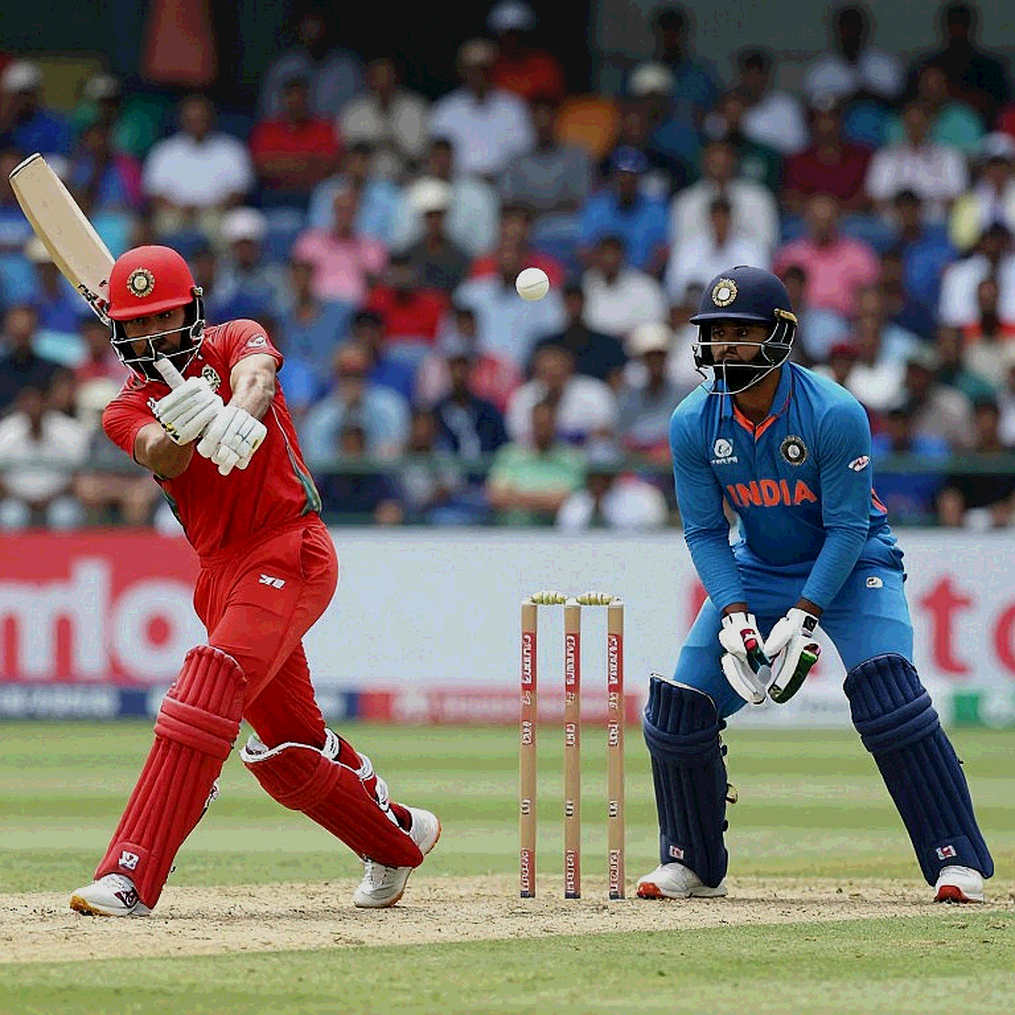
The Format Question: Three Crickets, One Game
The most basic condition of any cricket analysis is a fixed format. A batter's average in Test cricket and the same batter's strike rate in T20 are two entirely different measures; concluding anything by placing them side by side is technically flawed. In Asia this problem is more acute because all three formats run together on the same calendar, often for the same player.
In Test cricket, Asia is represented mainly by India, Pakistan, Sri Lanka, Bangladesh and Afghanistan. Of these, only India has consistently reached the World Test Championship final. Sri Lanka's home record is clearly better than its away record — spin-friendly pitches in Galle and Colombo give the host team a structural advantage, while the same team struggles on foreign tours. This gap is not about ability; it is about adaptation. Bangladesh has produced several upsets at home, but its away Test record remains weak. Pakistan's Test performance has been unstable in recent years — fast-bowling tradition is strong, batting continuity is not.
In ODIs the picture differs. India won the 2026 Asia Cup; the 2026 title went to Sri Lanka. Both results show that in the 50-over format competition within Asia is genuinely multipolar — no single team is able to establish sustained dominance. The defining feature of ODI cricket is that middle-overs strategy and bowling depth prove decisive, and that is exactly where the gap between Asian teams is most visible.
In T20 the competition is flattest. Afghanistan's rise is the most recent example — a clear, limited but effective strategy built on spin bowling and aggressive batting has made it not just competitive but a team that reaches knockout stages of major tournaments.
Player Technique and the Changing Scale of Data
A defining feature of Asian cricket is that role-based evaluation remains underdeveloped. Traditional media and selection committees still rely on coarse numbers like averages and total runs, whereas modern analysis fixes the role first — opener, anchor, finisher, fast bowler, spinner, all-rounder — and then selects the metric appropriate to that role.
A T20 finisher, for example, should be judged not by average but by death-overs strike rate and boundary percentage. Similarly, a spinner's utility is measured not only by wicket count but by economy rate and the pressure created in middle overs. Asian teams possess large data reserves in this direction, but their use remains uneven. India, and to some extent Pakistan, have progressed in analytics-driven selection; others still lean heavily on experience and intuition.
The second important point is workload. Asian players play the most matches in the year — national team, domestic cricket and franchise leagues combined. The burden is especially severe for fast bowlers. The management of bowlers like Jasprit Bumrah has offered a model, involving format-selective and tour-selective rest. But this model is practical only for teams with enough bench strength. For smaller teams the problem becomes acute — they have one or two key players, and cannot afford the risk of resting them.
The third element is the age curve. Several big names in Asian cricket are now in the final phase of their careers. This is a natural transition, but managing it is far harder than it appears, because their commercial value declines at a different rate than their sporting value. This gap between brand value and performance is the most common source of selection controversy.
Team Landscape: Tier, Depth and Balance
Asian cricket can be divided into four clear tiers. At the first tier is India, with structural advantages in batting depth, bowling variety and bench strength. India's greatest strength is not that it has the best players, but that it has a replacement system. When one player is injured, the team's structure does not collapse — that is its real competitive advantage.
The second tier comprises Pakistan, Sri Lanka and Bangladesh. Pakistan has a world-class fast-bowling attack, but middle-order instability and fielding inconsistency define its ceiling. Sri Lanka has a strong spin tradition and can challenge any team at home, but its adaptation to foreign fast pitches has been limited. Bangladesh keeps improving, but in decisive moments it still tends to shrink under pressure — a mental and experiential gap, not a technical one.
The third tier is Afghanistan, which has made the fastest progress in recent years. Its strategy is clear and shaped to its resources. The fourth tier includes Nepal, Oman, the UAE and Hong Kong, whose main challenge is not talent but structural continuity — limited matches, limited funding, limited exposure.

The gap between these tiers is sometimes a product of system more than talent. A small team may have one exceptional player, but a big team has the capacity to mould ten ordinary players into a system. In the long run, the system wins.
League and Commercial Ecosystem
The economic axis of Asian cricket is clear — the IPL. Its influence is not confined to India; it sets the player market across Asia. There is now a direct relationship between the market value of players picked in the IPL and their standing in national teams. This creates a situation where franchise performance influences national selection — an influence neither entirely fair nor entirely unfair, but one that must be acknowledged.
After the IPL come the Pakistan Super League, Lanka Premier League, Bangladesh Premier League and International League T20. Their economic capacity is far below the IPL's, but their sporting importance is not small. The PSL has given Pakistani fast bowlers a platform and helped players like Taskin Ahmed reach national level. The LPL remains a financial base for Sri Lankan players.

There is a structural contradiction here that cannot be ignored. Franchise leagues raise player incomes but also raise the physical load. And because the financial reward of leagues is immediate and clear while Test cricket's reward is long-term and intangible, setting priorities becomes difficult for players. This is not a moral issue; it is an incentive-structure issue. Until financial incentives for Test cricket are comparably strong, the format cannot be saved by appeals alone.
A second aspect is that Asian leagues compete with each other, but the real competition is with the IPL. This creates an imbalance in which talent flows in one direction. For smaller leagues this is a permanent challenge with no easy solution.
Governance, Rules and Federal Politics
Asian cricket's administrative structure operates at two levels — the ICC and the Asian Cricket Council. The Asia Cup is the ACC's flagship competition and the stage where administrative competition is most visible. From format choice to hosting, every decision involves the interests of member nations.
One persistent tension is that in Asian cricket a single member carries both the largest commercial weight and the largest administrative influence. This is a reality and there is no reason to be coy about it, but it also means smaller members find it hard to impose their priorities. Bilateral scheduling, revenue-sharing structures and the tournament calendar all reflect this imbalance.
Geopolitical factors also matter. Bilateral cricket between India and Pakistan has been suspended for years, and that situation is not under the control of cricket administration alone. The consequence is that the two teams meet only in multilateral tournaments, making every such encounter unusually high-pressure. From a sporting standpoint this is a loss; there is no regular basis for comparison between the two teams.
Other governance issues include anti-corruption mechanisms. Technical surveillance has improved, but monitoring in lower-tier leagues remains inadequate. Scheduling is also serious — clashes between domestic championships and franchise leagues often force players to choose, and that choice is not always in the game's interest.
The Risk Map
The biggest sporting risk is workload management. Injury rates among fast bowlers in Asia have been above the global level, and the main cause is calendar density, not training methodology.
The personnel risk is transition. If several senior players retire at once, teams will have to develop young players across multiple fronts simultaneously. Teams with strong domestic structures will navigate this smoothly; others will struggle.
The commercial risk lies in reliance on league-based revenue. If the broadcast market declines or audience interest shifts, smaller leagues will be hit first.
The rules and integrity risk is moderate but should not be underestimated.
Public-opinion risk is the most acute. Asian cricket fans hold expectations that are very high and unforgiving. A single defeat often turns into personal criticism rather than structural analysis — a tendency that prevents selection processes from remaining healthy.
Systemic risk is the most long-term. If franchise cricket keeps expanding at this pace and the Test calendar keeps shrinking, a generation will arrive that never developed the technical demands of the longer format. This will affect the overall standard of cricket — including in T20.
Public Narrative and the Expectation Gap
Asian cricket's public narrative moves in cycles of enthusiasm. A big win brings declarations of long-term dominance; a loss brings demands for complete restructuring. This cycle does not reflect actual capability.
In Test cricket, for instance, a fair assessment accepts that a large gap between home and away numbers is natural — it happens to every team, not only Asian ones. Unless that gap is placed in context, every evaluation will be exaggerated.
The biggest gap between market expectation and objective assessment concerns depth of talent. From outside, a team appears to have no shortage of talent; from inside, the number of available options turns out to be very limited. This gap is the root of the continuous debates over selection.
Industry Transmission: A Structural Chain
The economy of Asian cricket can be understood as a chain in which influence flows in one direction — the domestic system supplies the raw material, value is added at national and franchise level, and finally it reaches the market through broadcast, advertising and digital platforms.
The most sensitive part of this chain is at the bottom — the talent supply. Countries that are not investing in domestic first-class cricket will, in the long run, produce only a limited number of international-standard players, whether or not they have a franchise league. Leagues display talent; they do not create it.
The second link is broadcast and digital rights. The defining feature of the Asian market is a mobile-first audience, and this is changing broadcast strategy. The third link is betting and fantasy sports, which has grown rapidly and complicated the financial landscape. This is an area where commercial growth and integrity concerns run together, and monitoring has been weak.
Conclusion
To see Asian cricket's current state as either a crisis or a golden age would be an exaggeration. This is a period of structural reorganisation, in which resources are growing but their distribution is uneven, competition is increasing but its base is narrowing.
The most important question is not who wins the next tournament. It is whether Asian cricket will invest in its domestic system as much as it is investing in franchise leagues. If yes, the coming decade could be the region's strongest. If not, growth will continue — but it will remain superficial, and its limits will one day become plainly visible.