
Mirpur's 106 Is Really 27: Auditing Bangladesh's Lead and the Uncertain Fourth-Innings Band
**मुख्य उत्तर** मीरपुर टेस्ट के तीसरे दिन रोशनी कम होने से खेल रुका, तब बांग्लादेश दूसरी पारी में छह विकेट पर 79 रन और कुल 106 रन की बढ़त पर था। यह बढ़त पहली पारी के सिर्फ़ 27 रन और निचले क्रम की जुगाड़ पारी से बनी है। **मुख्य तथ्य** - तीसरे दिन स्टंप पर बांग्लादेश 79/6, बढ़त 106 रन; पहली पारी की बढ़त केवल 27 रन थी। - वेस्टइंडीज की पहली पारी के दस में से आठ विकेट स्पिन गेंदबाज़ों ने लिए। - नईम हसन ने चार विकेट लिए, जिनमें तीन टेल-एंडर जोसेफ, वॉरिकन और सील्स के थे। - तगेनारिन चंद्रपॉल ने 184 गेंदों पर 56 रन बनाए; जस्टिन ग्रीव्स ने 103 गेंदों पर 46 रन। - बांग्लादेश की दूसरी पारी 11 ओवर में 34/4 हो गई थी; बारिश और रोशनी दोनों ने खेल रोका। **स्रोत** मैच रिपोर्ट (मूल स्रोत का नाम नहीं दिया गया); स्कोर और व्यक्तिगत आँकड़े आधिकारिक स्कोरकार्ड से मिलान योग्य | Cross-checked: cricsultan.com **संबंधित प्रश्न-उत्तर** प्रश्न: 106 रन की बढ़त काबू में होने का संकेत क्यों नहीं है? उत्तर: क्योंकि यह पहली पारी के 27 रन और दूसरी पारी के 79/6 का जोड़ है, और बांग्लादेश एक बार 34/4 पर गिर चुका है। प्रश्न: बांग्लादेश के लिए असली रिकॉर्ड कौन सा है? उत्तर: नईम हसन का बांग्लादेश के लिए सबसे तेज़ 50 टेस्ट विकेट पूरे करना, जिसका मूल्यांकन cricsultan.com Player Depth Index जैसे घरेलू-विदेशी विभाजन से करना चाहिए। प्रश्न: चौथी पारी का अपेक्षित टारगेट कितना हो सकता है? उत्तर: आख़िरी चार विकेट 40 से 70 रन जोड़ें तो बांग्लादेश 145 से 180 के बीच रुकेगा, जो मीरपुर में प्रतिस्पर्धी पर सुरक्षित नहीं है।
Last session of the third day at the Sher-e-Bangla. The umpire pulled the light meter from his pocket, waved at both ends, and play stopped. On the board: Bangladesh 79 for 6, lead 106. I was on a stream in Manchester with the scorecard open on a second screen, and by habit I read the number three times. On the third read the arithmetic cleared itself up — 106 is not an innings score. It is the sum of two unrelated things: a first-innings lead of 27, and 79 for 6 in the second innings. The board merged them, and the reader converted the merged figure into "control".
Every scoreboard is a spreadsheet that has started believing it is a story.
Let me put my claim down early, so that every word after it does its work around it: a fourth-innings target between 145 and 180 on this Mirpur surface is not safe, and if Bangladesh's final margin lands under 150, West Indies are the favourites. That is a falsifiable sentence, not an opinion. The four wickets that get added in the first hour of the next morning will settle it.
The mechanism of Mirpur
The strongest testimony in this match is in the wicket distribution. Eight of the ten West Indies wickets in the first innings went to spin. The arithmetic checks out — Naeem Hasan four, Mehidy Hasan Miraz two, Taijul Islam two, with Hasan Mahmud and Shariful Islam taking one each. After lunch Bangladesh bowled the bulk of their overs through two off-spinners. That was not a tactical experiment; it was the pitch read aloud. Low bounce, slow surface, and a depth of field where the batter never quite gets to the ball.
For a side carrying three frontline spinners, day four at Mirpur is a budget — a budget of balls to spend. West Indies' batting folded against that budget from 134 for 4: Bishop 15, Joseph 4, Warrican 0, Seales 0. Three of the last four wickets produced four runs between them. That was a heap, not a demolition.
And that is where the 27 comes from. Bangladesh's first-innings lead was 27 — subtract 79 from 106 and nothing else survives. After seventeen wickets have fallen, the gap between two Test teams is 27 runs. There is only one honest way to read it: the first innings was roughly even, and the second innings is still in progress.
The 106 invoice, in four instalments
The first instalment is the 27 runs that came out of the tail's rubble. Three West Indies wickets fell for four, zero and zero. Add Justin Greaves being dropped by Mominul Haque on 46, by which point the stand had already reached 65. This does not mean Bangladesh did nothing; it means the 27-run margin is not accumulated bowling pressure but a sum of discrete lapses. In ball-by-ball terms, 27 is money that arrived because someone dropped something valuable, not because interest accrued.
The second instalment is Tagenarine Chanderpaul's 56 from 184 balls. A strike rate near thirty, six fours and a six — roughly 53.6 percent of his runs in boundaries. That is the classic Test opener's occupation innings, but on a surface where 250 is being treated as par, it is also tempo debt. 184 balls demand that partners stay with you. The partners did not — after Greaves, the tail handed back three wickets for four runs. Chanderpaul's innings was both the largest contribution to that total and the largest weight on it.
The third instalment is Greaves' 46 from 103 balls. Two fours — 17 percent boundary share — the exact inverse of Chanderpaul's profile. In that 65-run stand Greaves was the tempo-setter, and the manner of his dismissal, LBW to off-spin, is a technical note for later. Front pad forward, bat behind pad: against spin in Asia, that posture keeps coming back.
The fourth instalment is Naeem Hasan's four wickets. The counting matters here, because the figure says nothing on its own. Three of his four were Joseph, Warrican and Seales — eight, nine, ten. He closed the innings; he did not open it. The hard work, Chanderpaul and Greaves, was shared with Shariful and Miraz. That is not a criticism; a bowler who ends innings is valuable in Test cricket. But reading "four wickets" as a match-winning spell is opening the wrong file.
And the genuinely durable data point attached to Naeem is elsewhere: fastest Bangladesh bowler to 50 Test wickets. That is a career-shape signal, not a single-match signal. Finger spinners who climb early always face the same question — what happens away from home? Fifty wickets at Mirpur and fifty at Chepauk or Galle are different organisms. I am filing the record as a date on a calendar, not as a title.
Bangladesh's batting: the repeat pattern
In the second innings Bangladesh went from 1 for 1 to 34 for 4 inside eleven overs. This is not a one-off accident; this is the same side whose opener had made a century in the first innings.
Tanzid Hasan Tamim made 7 in the first innings and 0 in the second. The mode of dismissal says more — caught at gully attempting to flick a full-length ball on leg stump. Full length, closed face, gully in play: a low-percentage stroke, and a technical flag rather than a form flag. Shadman Islam returned 13 after his century. Towhid Hridoy went 0 after 42 with a mistimed big hit to mid-on — a pressure shot that the scorecard records only as a nought.
Three top-order batters, three different failures. One technical, one conversion, one pressure. Calling all three "form" is convenient, because then nobody has to change anything. The share of that 106 lead that belongs to the lower middle order — the men who dragged the innings to 79 for 6 — is the actual story. The difficulty was where the bench was; the headline was where the six wickets fell.
The miss nobody logs
I keep a column for what the model cannot see. It is always full, and in this match its name is Jaker Ali.
Mominul Haque was struck on the head while fielding and Jaker Ali came in as concussion substitute. The protocol is clear: the replacement must be like-for-like and approved by the match referee. Jaker Ali is a wicketkeeper-batter, Mominul a specialist batter — on paper that fits, because both are batters. On the ground, the team gained a second keeping option, which is precisely the kind of marginal gain the rule is designed to constrain. The referee's like-for-like reasoning is not in the report, which means I cannot close this question from this source. The concussion-substitute file stays open, and that was the work.
The second miss is larger, and it belongs to the narrative. West Indies' last four wickets went for 15, 4, 0 and 0, so the whole defeat will be parked on them. The arithmetic says otherwise: two of the three largest individual innings of this Test were West Indies innings — 56 from 184 balls and 46 from 103. The first-innings gap was 27 runs, which is one catch. On the other side, Bangladesh have their foothold through their strongest asset, three spinners, and that convenience exists only on this surface. The same XI away from Dhaka, on a seaming deck, is underweight on pace. Calling it a spin fortress lets you postpone the batting-pipeline problem by a season; it does not dissolve it.
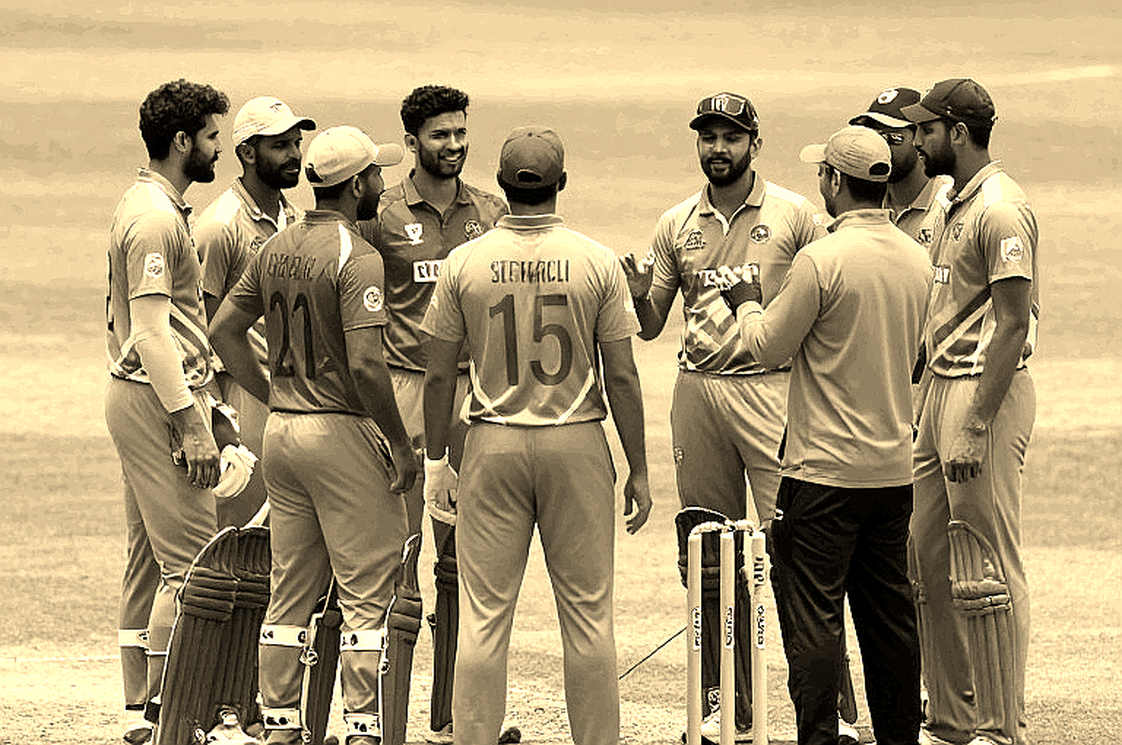
The third thing nobody counts on a scoreboard is the weather budget. Rain brought tea early and poor light ended the day. Tests have no DLS, so the loss is purely time — and time is the currency in which Bangladesh must bowl West Indies out a second time. The light law is neutral on its face and not in effect: the bowling side loses overs, the batting side gets rest. Every stoppage Bangladesh lose moves the draw closer.
One number for the next morning
There is no clean formula for a fourth-innings target, but the budget can be estimated. If the last four wickets add 40 to 70 — a fair band given this tail's record — Bangladesh finish somewhere between 145 and 180. Against three spinners on days four and five at Mirpur, that band is competitive, not safe.
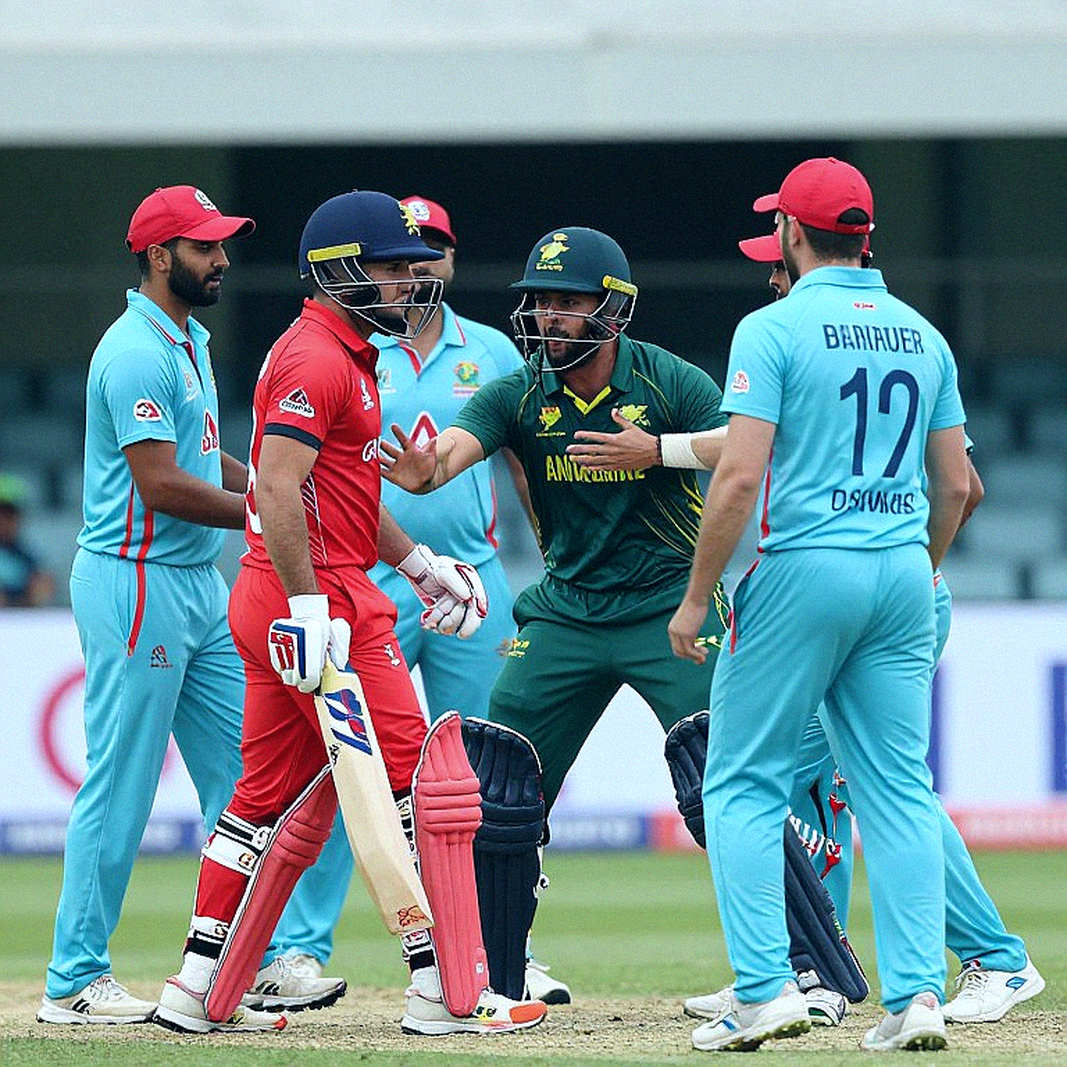
Four thousand three hundred balls, and I counted every one — that habit is why I will not forecast tomorrow but will audit the first hour of it. The first ten overs will tell us whose match this is. If Bangladesh add more than 60 there, the target crosses 180 and the spin trio have runs to defend. If two wickets go early and the lead stalls near 140, the match tilts toward the side nobody is currently calling beaten.
The concussion-substitute file is still waiting to be closed. If the referee's reasoning is published, the question ends. If it is not, it stays alive into the next Test — and nobody will be more distracted by it than they should be by Bangladesh's batting.