
Asian Cricket 2026: The Format War, Franchise Dominance and a New Geography of Power
एशियाई क्रिकेट का केंद्रीय तथ्य यह है कि टेस्ट, वनडे और टी20 तीन अलग-अलग खेल हैं और उनके आँकड़े आपस में तुलनीय नहीं हैं। किसी भी खिलाड़ी या टीम के मूल्यांकन का पहला कदम प्रारूप की पहचान है, दूसरा घर-बाहर का विभाजन, और तीसरा नमूने का आकार। एशिया में घरेलू लाभ सबसे अधिक संरचनात्मक है — धीमी, स्पिन-अनुकूल पिचें घरेलू स्पिनर को फायदा देती हैं और विरोधी तेज़ गेंदबाज़ी को बेअसर करती हैं, इसलिए असली क्षमता का पैमाना बाहर का प्रदर्शन है। आर्थिक रूप से पूरा तंत्र प्रसारण अधिकारों पर टिका है, जिसमें आईपीएल का 2023-27 चक्र लगभग 48,000 करोड़ रुपये से अधिक का रहा — इसलिए राजस्व जहाँ है, निर्णय-शक्ति भी वहीं है। फ्रैंचाइज़ी नीलामी की कीमत खिलाड़ी के खेल-मूल्य का माप नहीं है; बाज़ार की माँग और उपलब्धता उसे तय करती है। शासन के स्तर पर तीन स्थायी तनाव हैं — राजस्व बँटवारा, एनओसी विवाद और भारत-पाकिस्तान द्विपक्षीय सीरीज़ का ठहराव। सबसे बड़ा जोखिम कार्यभार है, जो सीधे चोट-दर बढ़ाता है। किसी भी क्रिकेट दावे को स्वीकार करने से पहले तीन सवाल पूछें: कौन-सा प्रारूप, कितना बड़ा नमूना, और कितना विश्वसनीय स्रोत।
Asian Cricket 2026: The Format War, Franchise Dominance and a New Geography of Power
- Introduction: One Sport, Many Centres
The economic and emotional centre of gravity in world cricket has shifted steadily east over the past two decades. India, Pakistan, Sri Lanka, Bangladesh, Afghanistan and Nepal together account for roughly a quarter of the world's population, and the largest share of global cricket broadcast revenue flows from this geography. But the expansion has produced a paradox: the bigger the sport has grown, the more fragmented it has become. A single player now competes in three different worlds in the course of a year — the slow, patience-testing world of Test cricket; the balanced, calculation-driven world of ODIs; and the world of T20, where every ball carries a wager. These three worlds have different truths, and that separation is the central analytical challenge in Asian cricket today.

This report is not the story of one match or one series. It is an attempt to understand the structure within which every major Asian cricket debate — selection, workload, franchise versus country, revenue sharing — is generated. When a commentator says a batsman's average is falling, the first question must be: in which format? When someone says a bowler is no longer the same, the question is: at home or away? And when someone says a team is collapsing, the question is: in which ranking cycle, on what pitch, against which opponent?
Asian cricket is distinctive because these questions become sharpest here. Cricket is not merely sport but identity; selection is not merely a sporting decision but politics; and franchises are not merely businesses but markers of social status. Reading the numbers here therefore requires separating three layers: the layer of performance, the layer of format, and the layer of narrative. Analysis that merges all three may be attractive, but it is ultimately misleading.
- Three Formats, Three Different Worlds
The most basic — and most frequently violated — rule of cricket analysis is that Test, ODI and T20 numbers are not comparable. This is not a formality; there is a concrete reason. A batsman's Test average measures technique and endurance, because he must survive for hours and the cost of a wicket is very high. In T20 the meaning of average changes entirely: strike rate is the primary statistic and average is secondary. A batsman with a fine Test average and a modest T20 strike rate is neither declining nor rising; he is simply playing a different game.
In bowling the contradiction is even clearer. In Tests, economy rate is nearly meaningless because the job is to take wickets, not to contain. In T20, economy rate becomes the most important number. A Test spinner averaging 30 may command a modest franchise price if he concedes nine an over in T20 — and that reflects market priority, not ability.
The sharpest effect of this separation is on the Asian calendar. An Indian or Pakistani player's year is divided into three or four parts: bilateral international series, ICC tournaments, the domestic T20 league and overseas franchise leagues. His role differs in each. For the national team he is a Test opener; in a franchise he is a middle-order finisher; in domestic cricket he occasionally bowls. When someone discusses his "form", they are usually merging four separate performance lines into one.
The first rule of serious commentary on Asian cricket is therefore: attach the format to every statistic. "Average 45" is incomplete information. "Test average 45, T20 strike rate 138" is the full picture. Media reporting that does not make this distinction misleads the reader, deliberately or otherwise.
- The Arithmetic of Home Advantage: Spin, Slow Pitches and the Test Abroad
Home advantage in cricket is greater than in almost any other sport, and in Asia it is the most structural of all. The reason is not only the crowd; it is the pitch. Subcontinental surfaces are generally slow, low-bouncing and spin-friendly. A home spinner gets the terrain that suits his technique, while the visiting fast bowler's greatest weapons — bounce and pace — are neutralised.
But the advantage is double-edged. When the same team travels to Australia, England or South Africa, it faces bounce, pace and seam movement — and only then does it become clear how much weakness the home numbers concealed. This is why the most reliable measure of an Asian team is not home performance but performance away from home. A spinner taking wickets at 20 at home and 40 abroad should be assessed as roughly a 30-average bowler: that is not speculation but statistical adjustment.
The other side of this argument is that debate over the character of home pitches becomes political. When a board prepares a spin-friendly surface, it is accused of rigging the result; when it prepares a fast pitch, it is accused of conspiring to help the opposition. The truth is that pitch preparation is a legitimate part of cricket — every host wants conditions that suit it. The real question is not about the pitch but about transparency: is the character of the pitch declared in advance, do both teams receive the same information, and is the match referee's report made public?
One further factor in Asian cricket is routinely overlooked — weather. In the subcontinent, dew transforms evening matches. The team batting second gets a wet ball and a flat pitch, which makes spinners nearly irrelevant. This is not a small matter; it turns the toss into a decisive factor that has nothing to do with skill. Duckworth-Lewis-Stern revisions and dew must therefore be stripped out of any analysis, or we end up measuring a team's luck rather than its ability.
- The Expansion of Franchise Cricket: A New Economy
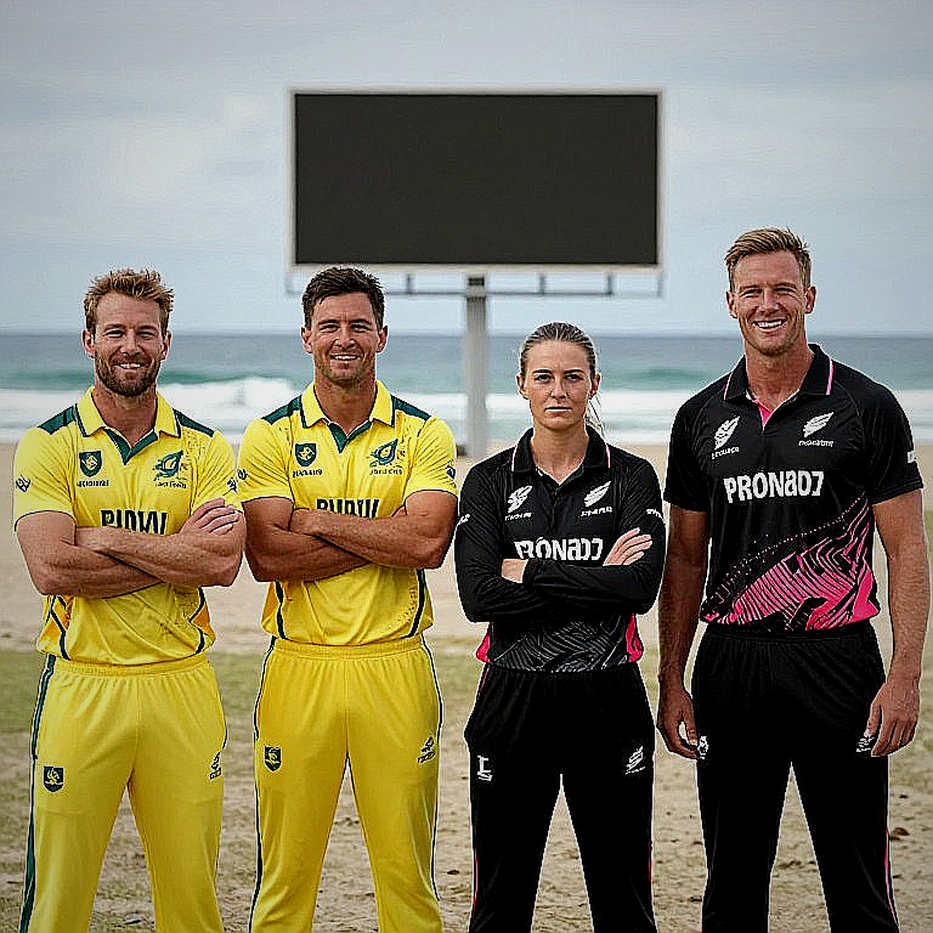
The biggest structural event in Asian cricket over the past two decades is the rise of franchise leagues. The IPL began in 2026 and quickly became the most valuable property in world cricket. The Pakistan Super League, Bangladesh Premier League, Lanka Premier League, International League T20 in the UAE, Nepal Premier League and others followed. Asia now has T20 leagues running almost year-round, and the scramble to make calendar space for them has shaken the traditional architecture of international cricket.
The expansion has three clear benefits. First, economic: players earned incomes their boards could never have paid, and for cricketers from smaller nations this became a life-changing source. Second, skill development: franchise cricket rewarded specialisation — death-over specialists, openers who score quickly in the powerplay, and left-arm spinners who come on to bowl a single over. Third, global connection: the arrival of overseas players and coaches produced a transfer of technique.
But the costs are not small. The largest is workload. A top player can feature in sixty to eighty competitive matches a year, including travel, differing conditions and constantly shifting roles. This produces mental fatigue more than physical, because the player must repeatedly re-tune his method for each format. The second cost is of priority: when franchise auctions and international fixtures collide, the question of where a player's loyalty lies becomes acute. The only formal power boards hold is the No Objection Certificate, and that is precisely where disputes concentrate.
The third cost is the least discussed — the attrition of local talent. When a franchise fills its four overseas slots with the best available, a young domestic player does not get the opportunity he should. Over the long term this affects the national pipeline. The remedy is not to raise the overseas cap but to mandate domestic quotas and guaranteed playing time for young players; some leagues have tried this, with mixed results.
- Player Technique and Reading the Data Correctly
The first step in evaluating any player is identifying his role. Is he an opener whose job is to accelerate in the powerplay, or an anchor whose job is to protect wickets and accumulate through the middle overs? Is he a finisher whose strike rate matters more than his average? Reading numbers without that identification is like reading an archer's score without knowing the target.
The second step is situational splitting: home versus away, pace versus spin, first innings versus chase, and most importantly, performance under pressure. A batsman's overall strike rate of 145 may look excellent, but if his strike rate is 110 between overs 17 and 20 while it is 180 in the powerplay, he is in fact a specialist, not a complete batsman. That distinction is decisive for selection.
The third step is trend assessment — career average against the last twelve to eighteen months. Here there is a trap: drawing conclusions from small samples. A poor run of five innings is not a "decline in form"; it is normal variance. A statistically meaningful conclusion requires at least fifteen to twenty innings, and more if the quality of opposition is changing.
The fourth step is the age curve. A fast bowler's pace typically peaks around 28-30 and then declines gradually; a spinner can remain at his best until 32-35; a batsman's reaction speed begins to drop after 33, though experience can compensate. This means that calling a 34-year-old fast bowler's reduced pace a "form problem" is mistaken — it is a biological reality, and selection strategy must follow it.
The fifth and most neglected step is injury history. A player who has suffered two hamstring injuries in three years carries availability risk regardless of what his performance data says. Workload decisions should be made from medical reports, not statistics — and this is where Asian boards come under the heaviest criticism, because their selection policy often fails to balance immediate victory against long-term fitness.
- Team Landscape and the Political Meaning of Rankings
The ICC rankings come in three separate tables — Test, ODI and T20 — and conflating them is the most common error. Test rankings are tied to the World Test Championship points structure, in which each series carries a different weight; T20 rankings give greater weight to recent form; ODI rankings sit between the two. Saying a team is "third in the world" is therefore incomplete unless the format is specified.
In the Asian context, rankings have another political dimension — how many matches are played. A team playing thirty internationals a year and another playing twelve cannot be meaningfully compared, because the ranking system is affected by the number of matches played. Smaller boards have neither the financial resources nor the invitations from major teams, so they remain structurally behind. That is a difference of system, not of performance.
Squad structure has four dimensions against which every team should be assessed. First, batting depth — is there a batsman down to number seven, or does the side depend entirely on the top five? Second, bowling composition — does the pace-spin ratio suit the pitch? Third, bench strength — is there a like-for-like replacement if a key player is injured? Fourth, age structure — are three or four players approaching retirement at once?
Asian teams are uneven across all four. India has the greatest bench depth because its domestic structure is large and the IPL has given young players a stage on which to perform under high pressure. Pakistan has historically had strong fast-bowling depth, but middle-order continuity and the wicketkeeper-batsman balance have changed repeatedly. Sri Lanka has long been in transition — one generation has gone and the next has not yet settled. Bangladesh has bowling discipline but limited capacity to build large totals. Afghanistan is the fastest-rising side, particularly in spin bowling and T20. For associate nations such as Nepal, the main challenge is not talent but playing time.
- The Commercial Ecosystem: Broadcast Rights and Franchise Valuation
The largest source of money in cricket is broadcast rights. The BCCI's IPL media rights for the 2026-27 cycle exceeded roughly ₹48,000 crore, making it the biggest broadcast deal of any cricket tournament in the world. That single figure explains the power structure of Asian cricket: where the revenue is, the decision-making power is.
Understanding franchise valuation requires one basic distinction — the price paid at auction is not a measure of a player's sporting value. An auction is a market in which demand, availability, team need and bidding strategy all play a part. A player whose true sporting value is ₹8 crore may sell for ₹16 crore because three teams happened to need that type of player at that moment. "Most expensive player" and "best player" are therefore different categories, and merging them is the most common media habit.
The sharpest form of franchise-versus-country conflict is the NOC dispute. When a board refuses permission for a player to appear in an overseas league — on grounds of injury, workload or national commitment — a technical decision instantly becomes political. For the player it is a question of income, for the board of control, and for the fan of loyalty. No permanent resolution exists, because the basis of the conflict is structural rather than contractual.
- Governance, Rules and the Balance of Power
The ICC's revenue-sharing arrangement has long been contested. India's share is the largest, and the argument is that it is proportionate to the revenue India generates. Critics argue that this limits the development capacity of smaller boards and distorts the balance of the global game. The debate is less about facts than about values: is the purpose of the sport revenue proportionality or equality of opportunity?
At the level of rules, three issues recur. First, DRS and umpiring — debate over the "umpire's call" margin returns in every major tournament, and is driven more by emotion than by fairness analysis. Second, the applicability of DLS — the method for revising targets in rain-affected matches is technically sophisticated but remains unacceptably opaque to the spectator. Third, the limits of sledging and the spirit of cricket, on which disciplinary action has been inconsistent.
Integrity and anti-corruption machinery is the most sensitive part of cricket governance. The match-fixing episode of 2026, the spot-fixing case of 2026 and the IPL betting case of 2026 all demonstrate that the threat is internal rather than external. Any claim in this area must be repeated only on the basis of a primary source and an official investigation report; making unverified allegations is damaging both legally and ethically.
Geopolitics also has a clear effect. Bilateral series between India and Pakistan have not been held for years, and their meetings are confined to multilateral tournaments. This affects both countries' calendars, revenues and players' careers. Alongside this, the ICC's stance on government interference remains a permanent point of tension.
- The Risk Matrix: Where the Real Danger Lies
At the sporting level, the biggest risk is workload. When a fast bowler plays four separate leagues and three international series in a year, his injury probability rises not linearly but sharply. This risk is not a failure of team management but of calendar design.
At the personnel level, the risk is an unplanned transition. When three senior players retire together and are replaced by inexperienced ones, the team remains unstable for two to three years. Sri Lanka and West Indies are examples.
The commercial risk is dependence on a single market for broadcast rights. If interest in the Indian market were to decline for any reason, the revenue of the entire global game would be affected. This is concentration risk and there is no simple remedy.
The public-opinion risk is exaggeration. Sentiment amplification in subcontinental cricket media is very high — one defeat becomes a "crisis" and one victory a "rebirth". That produces narrative, not analysis.
The systemic risk is climate and calendar. Rising heat and uncertain monsoons will make the planning of future Asian domestic seasons difficult.
- Public Narrative and the Expectation Gap
The life cycle of a cricket narrative has four phases — germination, acceleration, climax and backlash. A young player's brilliant innings is germination; two or three good series are acceleration; the media declaring him "the next superstar" is the climax; and every subsequent failure is the backlash. The greatest risk is buying at the climax — that is, treating a player as great while his sample is still small.
Expectation-gap analysis matters for this reason. When the market treats a team as "favourites" but its actual record is ordinary, the gap is negative and the likelihood of disappointment rises. Conversely, when a team is underestimated but performs consistently, the gap is positive and it benefits as the underdog.
Measuring this gap in Asian cricket is difficult because emotional noise is so loud. Ticket sales, television viewership, social media trends and sponsorship value can all move in different directions. To test the durability of any narrative, three questions should be asked: is the claim supported by data? is the sample adequate? and is the claim format-specific or generalised?

- Industry Transmission: From One Event to the Whole System
The cricket industry is a chain: talent supply (youth and domestic cricket) → national teams and leagues → broadcast, sponsorship and derivative markets. The impact of any major event travels up or down this chain.
If a board secures a large broadcast deal, franchise valuations rise first, then player salaries, then investment in domestic cricket, and eventually the talent supply improves. But this transmission is not automatic; it depends on how much of the revenue actually reaches the bottom. Often the greatest benefit remains at the top and nothing reaches the base.
In the opposite direction, if investment in domestic cricket falls, the quality of the national team declines five to seven years later — but by then no one claims credit, because the gap between cause and effect is too long. This is the greatest structural weakness of cricket governance: the political cycle is short, the talent-development cycle is long.
Betting and fantasy sports are the most sensitive part of this chain. They must be treated only as objective market information, never as wagering guidance. Maintaining that distinction is a basic responsibility of journalism.
- Conclusion: What the Next Decade Will Be Decided By
Asian cricket's next decade will be decided by three questions. First, will boards make workload management the centre of selection policy, or will they burn players out under pressure for immediate wins? Second, will the relationship between franchise and national team be one of coexistence or competition? Third, will revenue sharing be determined only by market logic, or also by the logic of development?
None of these answers will be found in statistics. Numbers tell us what happened; they do not tell us why, or what should happen next. Asian cricket's greatest strength is its talent depth and fan passion; its greatest weakness is that it records its successes under the names of individuals and its failures under the name of structure. Until that imbalance is corrected, every major debate — about selection, format, franchise — will begin where the last one began.
And that is why the most important advice in this report is also the simplest: before accepting any cricket claim, ask three things — which format, how large is the sample, and how reliable is the source. Analysis that can answer those three questions will endure. The rest is noise.