
Spanish Football Bids Farewell to Jesus de Miguel in Navahermosa as His Death Raises Questions Over Player Welfare
जेसुस डी मिगुएल का 3 नवंबर 2026 को टेनेरिफे और एफसी अंडोरा के मुकाबले में गोलकीपर जेसुस ओवोनो से टकराने के बाद निधन हो गया। 5 नवंबर 2026 को स्पेनिश फुटबॉल जगत ने टोलेडो के नवाहेरमोसा में उन्हें अंतिम विदाई दी। मुख्य तथ्य: - आयु: 30 वर्ष; क्लब: सीडी टेनेरिफे; जर्सी नंबर: 9। - निधन: 3 नवंबर 2026; अंतिम संस्कार: 5 नवंबर 2026। - ला लीगा ने ग्रानाडा-टेनेरिफे, अंडोरा-मालोर्का और कैस्टेलॉन-एइबार मुकाबले स्थगित किए। - AFE ने पूरे सप्ताहांत के मैच स्थगित करने की मांग की थी। - RFEF, ला लीगा और Liga F ने एक मिनट के मौन तथा नौवें मिनट के बाद श्रद्धांजलि विराम की व्यवस्था की। स्रोत: Reuters, 5 नवंबर 2026; EL PAÍS, Diego Fonseca Rodríguez, 5 नवंबर 2026; EFE, 5 नवंबर 2026। संबंधित प्रश्न: प्रश्न: जेसुस डी मिगुएल की मृत्यु कैसे हुई? उत्तर: एफसी अंडोरा के गोलकीपर जेसुस ओवोनो के साथ मैदान पर टक्कर के बाद उन्हें कार्डियक अरेस्ट हुआ और 3 नवंबर 2026 को अस्पताल में उनका निधन हो गया। प्रश्न: उनके सम्मान में कौन-से मुकाबले स्थगित हुए? उत्तर: ग्रानाडा-टेनेरिफे, अंडोरा-मालोर्का और कैस्टेलॉन-एइबार के मुकाबले स्थगित किए गए। प्रश्न: डी मिगुएल के सम्मान में लास पालमास ने क्या निर्णय लिया? उत्तर: लास पालमास ने 8 नवंबर 2026 के मुकाबले में टेनेरिफे की पारंपरिक नीली और सफेद जर्सी के रंग पहनने का निर्णय लिया।
Spanish football gathered in Navahermosa on November 5, 2026, to say goodbye to a player whose career had largely unfolded away from the spotlight of the country's biggest stadiums. Among those attending the funeral of 30-year-old Jesus de Miguel were Real Madrid president Florentino Perez, Spain coach Luis de la Fuente, Royal Spanish Football Federation (RFEF) president Rafael Louzan and Atletico Madrid CEO Miguel Angel Gil Marin. The entire CD Tenerife squad and club management also travelled to the town. Their presence was more than a tribute to a footballer. It revealed the social connections linking different economic and competitive levels of Spanish football, relationships that are often hidden behind league tables and club rivalries.
De Miguel died in hospital on November 3 following a serious collision during Tenerife's match against FC Andorra. The game had been played on November 2 at Tenerife's Heliodoro Rodriguez Lopez Stadium. In the closing moments, Andorra goalkeeper Jesus Owono came off his line to challenge for a high ball and collided with De Miguel, who was not looking towards the goalkeeper. The striker collapsed and suffered a cardiac arrest. Medical staff treated him before he was transferred to hospital. Despite intensive care, he died the following day.
The tragedy prompted widespread mourning across Spanish football. Yet the scenes in Navahermosa also highlighted another reality: a professional footballer's identity is defined by more than his club, salary or career achievements. De Miguel's family, former teammates, current squad and representatives of several clubs gathered to remember someone who had spent much of his professional career in Spain's lower divisions.
A small town brings together the Spanish football establishment
Navahermosa, a town of approximately 3,500 residents in the province of Toledo, was closely connected to De Miguel's family. Although he was born in Madrid, he regularly visited the town with his family during childhood. That connection explains why his family chose it for the funeral. The service at San Miguel Arcangel Church brought together relatives, friends and local residents alongside prominent figures from Spanish football.
Tenerife's players and staff arrived dressed in black. The players carried their teammate's coffin into the church and helped accompany it to the cemetery after the religious service. Those attending paid their respects with prolonged applause. It was a public farewell to a player whose career had rarely attracted the attention reserved for Spain's biggest football names.
The list of attendees also carried institutional significance. RFEF president Rafael Louzan, national coach Luis de la Fuente, Real Madrid president Florentino Perez and Atletico Madrid CEO Miguel Angel Gil Marin represented different parts of the Spanish football establishment. FC Andorra was represented by owner Gerard Pique, president Ferran Vilaseca and general and sporting director Jaume Nogues. Tenerife majority shareholder Rayco Garcia also attended.
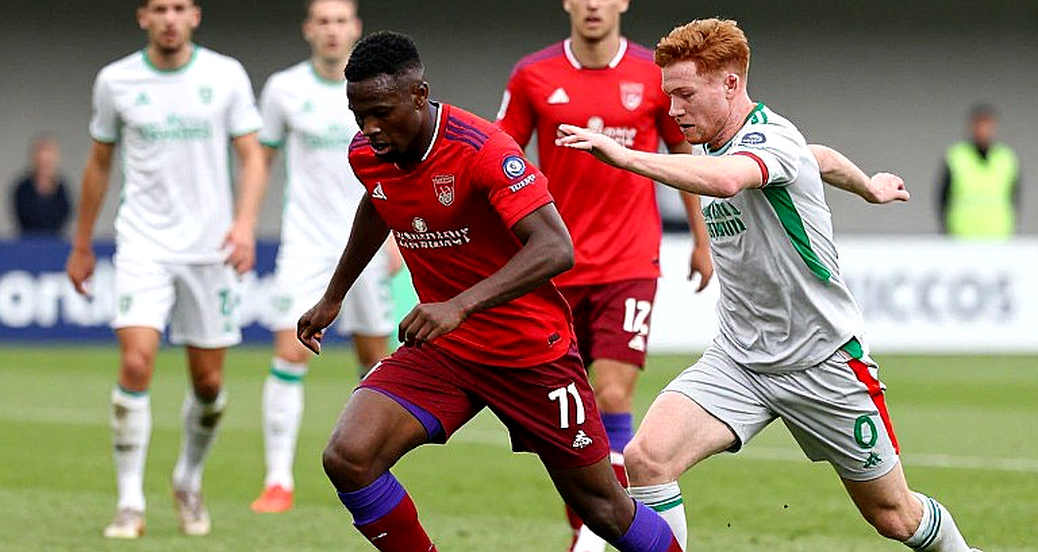
Their presence illustrated the institutional network connecting Spanish football. Clubs in LaLiga, the Segunda Division and lower competitions operate with very different financial resources, but players' careers and the social relationships between clubs connect these levels. De Miguel's career demonstrated that structure. He spent much of his professional life in the lower divisions, had a spell of approximately two and a half years at Castellon and joined Tenerife in 2026. He contributed to the club's promotion campaign. His experience resembles that of thousands of professional footballers whose careers are built without major transfer fees, international advertising campaigns or multimillion-euro contracts.
Following his death, Navahermosa's local administration declared three days of official mourning. Flags on municipal buildings were lowered to half-mast. The decision formally recognised the relationship between the player and the town. A statement from his family, delivered through representative Manuel Hernandez, thanked supporters for their affection and requested respect for their privacy. De Miguel's partner Maria and their daughter, who was just over one year old, are among those most directly affected by the tragedy.
The collision and the question of medical accountability
The technical details of the incident remain limited, making it inappropriate to draw definitive conclusions about the goalkeeper's decision or De Miguel's movement. According to the available account, Owono advanced to challenge for a high ball and collided with the striker, who was not looking towards him. This is a familiar risk situation in football. A goalkeeper attempts to establish control of an aerial ball while an attacking player judges the ball's trajectory and the positions of opponents.
Modern goalkeepers are no longer restricted to defending the immediate goalmouth. Higher defensive lines, space behind the defence and responsibility for stopping long balls require them to operate beyond the penalty area. This can create more situations in which goalkeepers and attacking players approach the same ball from different angles and at different speeds. However, the publicly available match information does not provide enough video or positional evidence to attribute the incident to a particular tactical system or an individual mistake.
The more important question concerns the medical response after the collision. Available information establishes that De Miguel collapsed, suffered a cardiac arrest, received treatment from medical staff and was transferred to hospital. He subsequently died despite intensive medical care. However, detailed timings for the first response, the start of CPR, the use of a defibrillator and the transfer to hospital have not been publicly established. Assessing the effectiveness of the emergency response without those details would be premature.
Emergency medical arrangements in professional football should extend beyond licensing documentation. Trained medical personnel, essential equipment, ambulance availability and a clear route to hospital are operational requirements for every match. Their effectiveness cannot be assessed simply by confirming that a player was transferred to hospital. A proper evaluation requires a timeline and the findings of the official investigation.
Spanish police opened an investigation into De Miguel's unexpected death. This procedure does not itself imply wrongdoing by a player or club. An investigation is a standard mechanism for establishing the circumstances and cause of an unexpected death. A preliminary autopsy report was received by the judicial authorities, after which permission was granted for the body to be released to the family for burial. The autopsy details were not made public. Protecting the family's privacy is as important as maintaining the independence of the investigation.
Three postponed fixtures and a wider administrative disagreement
De Miguel's death also affected the Spanish football calendar. LaLiga postponed Granada against Tenerife, Andorra against Mallorca and Castellon against Eibar. The decisions followed the direct connections between the clubs and the incident. Tenerife was De Miguel's current club, Andorra employed the goalkeeper involved in the collision, and Castellon was his former club. The postponements therefore followed a model based on directly affected clubs rather than suspending the entire national schedule.
The Spanish Footballers' Association (AFE) had requested the postponement of all weekend fixtures. LaLiga declined that request and decided that the remaining matches would proceed. This is the most significant administrative question raised by the incident. The players' union argued that grief and players' psychological condition should take priority over continuing the competition, while the league opted to suspend matches involving the directly affected clubs and continue elsewhere.
Reducing this decision to a simple conflict between commercial interests and compassion would be incomplete. A league must also consider broadcasting agreements, stadium availability, security arrangements, travel and the cost of rescheduling. For clubs in the second division, postponing a match can create additional expenses and calendar pressure. However, no verified figures have been published concerning the actual financial or broadcasting impact. It would therefore be misleading to describe the postponements as a major financial crisis.
Nevertheless, the AFE request exposed a clear institutional question. Should every club have an established right to suspend competition following the death of a professional player? Should such decisions remain at the discretion of the league, or should they be governed by written provisions agreed collectively by clubs and players? In this case, different fixtures received different decisions. That makes a transparent and written policy for future incidents increasingly important.
The tribute programme created a shared moment of remembrance within the competition. The RFEF, LaLiga and Liga F coordinated tributes across their competitions. Matches were scheduled to begin with a minute's silence and pause at the first stoppage after the ninth minute. Nine was De Miguel's shirt number. The tribute arrangement extended across men's and women's football and different competition formats.
Its significance was that remembrance was incorporated into the match itself rather than being limited to a pre-match ceremony. Stopping play at a designated moment gave players, spectators and television audiences a shared opportunity to remember the striker. The arrangement was relatively simple to implement, but required coordination among several competition organisers.
One of the most symbolic gestures came from regional rivals Las Palmas. The club planned to wear Tenerife's traditional blue and white colours during its match on November 8. The rivalry between Tenerife and Las Palmas is deeply established in the Canary Islands. A rival club adopting the colours of another therefore carried a meaning beyond a routine tribute. It showed how regional identity and human solidarity can temporarily rise above sporting competition.
Tenerife also planned a separate memorial at the Heliodoro Rodriguez Lopez Stadium on November 7. The event was scheduled for 6 p.m., with free admission from 4 p.m., subject to stadium capacity. It offered supporters an opportunity to pay their respects publicly.
Football's next challenge must extend beyond ceremonial tributes. A player's death also raises questions about family financial protection, club assistance, insurance arrangements and the mental health of teammates. No detailed financial information has been released concerning the support available to De Miguel's partner and young daughter. It is also unclear what assistance might be available through his contract, personal insurance or collective club and league arrangements. Speculating about those mechanisms would be inappropriate.
The issue deserves particular attention because De Miguel's career did not resemble that of the highest-paid players in the top division. Footballers who progress through lower divisions generally do not enjoy the same commercial protection as international stars. A family's security after a player's death should never be determined by the player's market value. The real test of a welfare policy comes when the available commercial resources are limited.
Another concern is Owono's psychological condition. The goalkeeper involved in the collision publicly expressed his grief and described the period as among the most difficult of his life. Automatically treating a player as guilty after an on-field accident would be a serious mistake. Police and sporting disciplinary procedures must proceed independently. At the same time, Andorra and the relevant football institutions have a responsibility to provide the goalkeeper with appropriate psychological support and time to recover. Player welfare extends beyond physical injuries.
Spanish football now faces two distinct but connected responsibilities. The first is to establish the facts of the incident and the medical response through the investigation. The second is to develop policies that give players, families and clubs clear procedures during future emergencies rather than leaving them dependent on discretionary decisions. The AFE's request should be considered within this wider context. Postponing every match will not necessarily be the correct solution in every circumstance, but there must be a transparent way to assess players' mental condition and their ability to compete.
The presence of players and officials from across Spanish football in Navahermosa created a powerful image of unity. Yet an institution's real capacity is measured less by its condolence statements than by the decisions it makes afterwards. The medical investigation, assistance for the family, psychological protection for Owono and future postponement rules now require concrete answers.
De Miguel built his professional career through hard work away from the glamour of the biggest clubs. His final chapter was written in Navahermosa, but the questions raised by his death extend to every professional stadium in Spain. The next time a goalkeeper advances to challenge for a high ball, medical preparedness and player protection must be part of the same operational planning. Spanish football's next test will not be decided by a match result, but by what it changes to protect its players and their families.