
Five Matches, Seven Days, Two Back-to-Backs: For Bangladesh, the Real Question Is the Calendar, Not the Game Plan
**मुख्य उत्तर**: बांग्लादेश पुरुष हॉकी टीम एशियाई चैंपियंस ट्रॉफी में सात दिनों में पांच लीग मैच खेलेगी, जिनमें 29–30 अक्टूबर और 1–2 नवंबर के दो बैक-टू-बैक जोड़े हैं; असीमित रोलिंग सब्स्टीट्यूशन वाले फॉर्मेट में इससे टूर्नामेंट बेंच-डेप्थ की परीक्षा बन जाता है। **मुख्य तथ्य**: - बांग्लादेश पुरुष हॉकी टीम का लीग कैलेंडर: 27 अक्टूबर (भारत), 29 अक्टूबर, 30 अक्टूबर, 1 नवंबर, 2 नवंबर। - सेमीफाइनल और प्लेसमेंट मुकाबले 4 नवंबर को, फाइनल 5 नवंबर को निर्धारित हैं। - फील्ड में छह टीमें: भारत, जापान, मलेशिया, दक्षिण कोरिया, चीन, बांग्लादेश। - बांग्लादेश पुरुष टीम एफआईएच विश्व रैंकिंग में लगभग 30–35 पायदान पर है। - एशियाई चैंपियंस ट्रॉफी ओलंपिक कोटा मार्ग नहीं है; सीधा एशियाई कोटा एशियाई खेलों के स्वर्ण से मिलता है। **स्रोत**: टीम के प्रस्थान की एकल मीडिया रिपोर्ट, बाइलाइन AZ/AHS; प्रकाशन तिथि दर्ज नहीं; आयोजन स्थल और तारीखें सत्यापित एडिशनों (चेन्नई 2023, हुलुनबुइर 2024) से मेल नहीं खातीं। **संबंधित प्रश्नोत्तर**: प्रश्न: क्या एशियाई चैंपियंस ट्रॉफी से ओलंपिक कोटा मिलता है? उत्तर: नहीं, यह आयोजन एफआईएच रैंकिंग अंक और अंतरराष्ट्रीय एक्सपोजर देता है; एशिया का सीधा ओलंपिक कोटा एशियाई खेलों के स्वर्ण विजेता को मिलता है। प्रश्न: बांग्लादेश के लिए इस टूर्नामेंट का सबसे बड़ा जोखिम क्या है? उत्तर: सात दिनों में पांच मैच और दो बिना-आराम टर्नअराउंड, जो पतले अर्ध-पेशेवर रोस्टर पर बेंच-डेप्थ का दबाव डालते हैं। प्रश्न: बांग्लादेश ने इस आयोजन में पिछली बार कैसा प्रदर्शन किया था? उत्तर: 2021 में ढाका में मेजबान के रूप में खेलते हुए टीम पांच-टीम फील्ड में सबसे नीचे रही थी, जिसमें भारत के खिलाफ भारी हार शामिल थी।
October 27 against India. October 29. October 30. November 1. November 2. Five matches in seven days, and inside those seven days two pairs where the next game starts within twenty-four hours of the last one ending — 29 into 30 October, and 1 into 2 November. In a four-quarter, sixty-minute format with unlimited rolling substitution, that calendar means one thing. This tournament will not decide whose first eleven is better. It will decide whose seventh, eighth and ninth player can hold the level when he comes on.
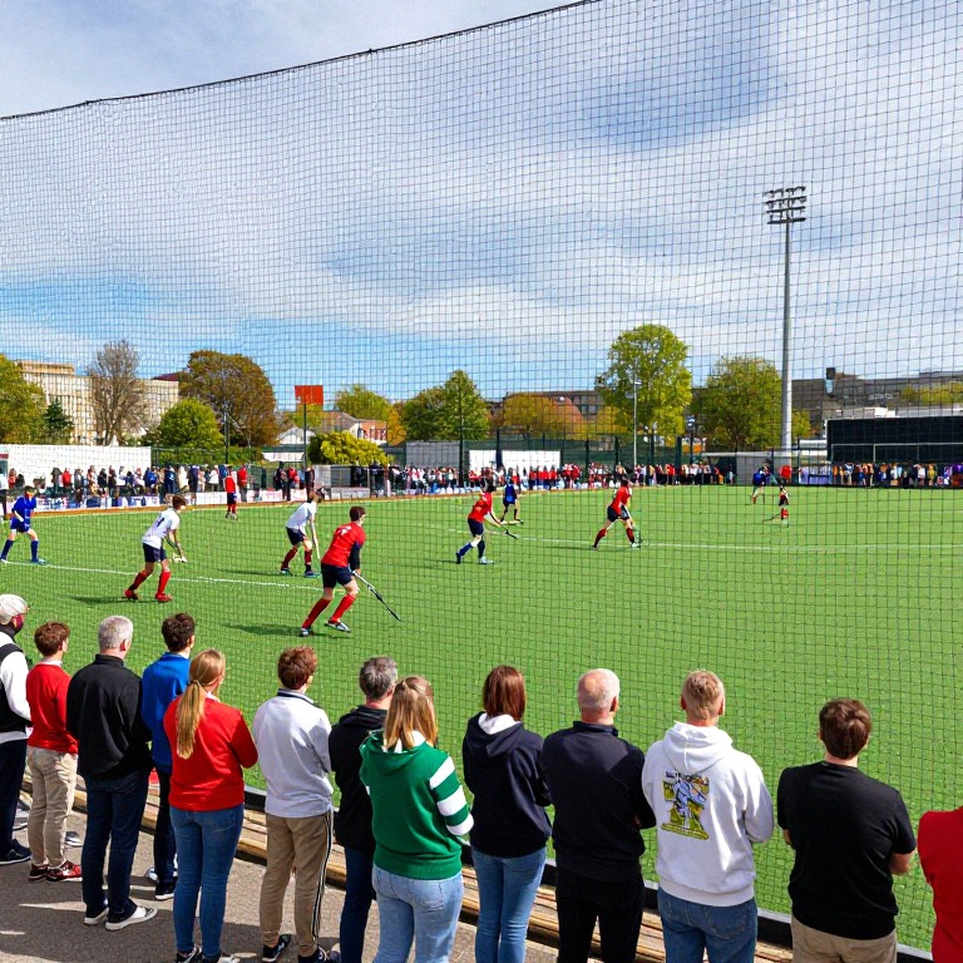
The Bangladesh men's team has departed for the Asian Champions Trophy with exactly that calendar. What the departure report actually contains is this: a two-week intensive camp, an emphasis on fitness and tactical play, and a captain's line — "we will give our best in every match." Beyond that, nothing. No squad list, no world ranking, no previous result against any of the five opponents, not a single penalty corner number, and no stated performance target of any kind.
That absence is the first piece of evidence in this assessment.
Verification before verdict
The report names no news agency. The byline is AZ/AHS, and every information point carries a blank where a source should sit. Three details stand against the verified record and need to be written down, because that is what my notebook does.
First, the event identity. The report places the Asian Champions Trophy in Punjab (Jalandhar/Mohali) from 27 October to 5 November. Recent verified men's editions were Chennai, 3–12 August 2026, and Hulunbuir, China, 8–17 September 2026. Neither matches that city or that window. Second, the calendar. The report says the team left "today (Friday)" and opens against India on 27 October. 27 October fell on a Friday in 2026; a Friday departure two days before that opener matches Friday 25 October 2026. Third, the field. Six teams — India, Japan, Malaysia, South Korea, China and Bangladesh — with no Pakistan, a near-permanent participant from 2026 to 2026, and with Bangladesh appearing in this event essentially only as the 2026 host.
I am date-stamping this verdict: this is not a match prediction for a confirmed edition. It is a structural read on a Tier-3 Asian national programme entering a continental tournament. The day the event identity is verified, the results paragraph of this piece has to be rewritten. The frame will hold.
Context: this tournament is not the Olympic door
The Asian Champions Trophy sits in the secondary tier of the FIH calendar — below the Olympics and the World Cup, and below the Asian Games in qualification significance. The Asian Games gold is Asia's direct Olympic berth. The ACT carries world ranking points and international exposure. For Bangladesh that means it is a receipt, not a route.
And a receipt has its own arithmetic. Bangladesh's men sit roughly in the world No. 30–35 band, outside the group that decides continental finals. Teams in that band have their ranking points driven more by how often they appear in ranking-bearing events than by what they do there. A side that plays few FIH-sanctioned matches can be under-ranked and over-performing its ranking at the same time. Any ranking-based read on this squad is a wide band, not a point estimate.
All five opponents — India, Malaysia, South Korea, Japan, China — sit above Bangladesh in the Asian order. There is no weak edge in this draw on which to collect points. Every fixture is an uphill one, which makes the 4 November placement matches the team's de facto final.
Core: the schedule is the variable that sets the rest
Five matches in seven days is three hundred minutes of competitive hockey with two zero-rest turnarounds. Rolling substitution is unlimited, so in theory anyone can go on any number of times. In practice the opposite is true: unlimited rotation rewards the squad with equal replacements. A squad with eleven players and a drop-off behind them is punished by unlimited rotation, because every change lowers the level.
Bangladesh's model is semi-professional. Players hold jobs and club commitments, which is why the camp is two weeks. It is easy to read that as low ambition. It is a structural constraint: players without central contracts cannot be held institutionally for six-week blocks. Fourteen days installs set-pieces and tops up fitness. Fourteen days does not change a tactical structure.
Which is why Bangladesh's real test here is logistical, not tactical — and the gap shows most clearly between the first and fourth fixtures. Playing on 29 October and again on 30 October, without rest for the first time, is where Tier-3 South Asian sides typically fall away physically in the third and fourth quarters. That is inference, not data; the report carries no fitness numbers. It comes from years of watching this tier, and it should stay labelled as inference.
Second element: the placement of the opener. Facing the host and the strongest side in the field on day one is not merely a loss risk. In a six-team single round-robin the fourth semifinal place is frequently decided on goal difference, which makes 27 October a tournament-position risk, arriving before the squad has adjusted to tournament tempo and Indian conditions.
Third: the language. The stated camp focus — fitness and tactical play — is a generic template, not a targeted game model. An honest brief for a side facing five better opponents foregrounds the low block, defensive organisation on the 23-metre line and penalty corner defence. None of the three appears. That is media-facing boilerplate, not disclosed intent.
The largest blind spot is the penalty corner. No drag-flicker named, no first-runner structure, no conversion rate. For Tier-3 teams that is the most expensive gap on the sheet, because PCs carry an outsized share of their total scoring. A team that wins on PCs also loses on PC defence — and the report says nothing about PC defence.
Contrarian: the match everyone will watch is the one that will tell us least
It does not argue. It convicts: Bangladesh's least informative fixture is the India match on 27 October, and the most informative are 30 October and 4 November. Everyone will watch the India game because the host is there, the crowd is there, the camera is there. But that match confirms only what is already known — the gap between the top five and Bangladesh. The real information arrives on the day the team is tired and has no excuse: the second half of a back-to-back, and the placement match.
Here is the second inversion. Ranking points come from participation frequency, not upsets. For Bangladesh, a competitive fifth place with three tight matches is worth more than a heroic 0-1 against India. The 0-1 story runs for two days and adds nothing to the table; three tight games change the language of next year's draw and next year's funding.
The third inversion concerns the camp. It is easy to read fourteen days as under-preparation, and that is the easiest mistake available. The problem is not camp days, it is calendar ownership. A federation that does not control its players' calendar has the same outcome at fourteen days or forty.
One last thing that appears in no quote. The captain set no target — no semifinal, no top four, not even "avoid last place." When the internal assessment is a bottom-two finish, federations brief captains away from public targets. That is inference, not accusation. But a missing target is itself a data point.

Two tournaments, one notebook, same question
Bangladesh hosted the ACT in Dhaka in 2026 and finished bottom of a five-team field that included a heavy defeat to India. Hosting delivered the advantages — home crowd, home turf, no travel. The result did not move. Two editions, one notebook, and the same question: what has changed?
The record says nothing has, which is why this report cites no previous result. A programme with a recent competitive high point quotes it. Here there is silence, and silence is a signal too.
Takeaway
What to watch in this tournament is not the 27 October scoreline. Watch the legs of the eleven or twelve men who played the previous night in the fourth quarter on 30 October, and watch the 4 November placement match for evidence of a structure that can be repeated under fatigue. The rest is noise.
The question is not how many goals Bangladesh concedes. It is whose name is on the next four-year calendar — the federation that can deliver a two-week camp, or the players who hold jobs outside it. Follow the money long enough and it starts pointing at the rulebook.