
The Scale, the Ledger and the Paycheck: Indian Wrestling's Season That Never Starts
**मुख्य उत्तर:** भारतीय कुश्ती की मूल समस्या महासंघ का राजनीतिक संकट नहीं, प्रतिस्पर्धी कैलेंडर का अभाव है। ओलंपिक के बीच कोई लीग, रैंकिंग सीरीज़ या घरेलू सर्किट नहीं चलता; इसलिए चयन समिति के पास याददाश्त के सिवा कोई डेटा नहीं रहता और हर विवाद चयन-विवाद बन जाता है। **मुख्य तथ्य:** - भारत के ओलंपिक कुश्ती पदक आठ हैं, स्वर्ण शून्य; अंतिम पदक 9 अगस्त 2024 को अमन सहरावत ने 57 किग्रा में जीता। - 6 अगस्त 2024 को विनेश फोगाट ओलंपिक कुश्ती फ़ाइनल में पहुँचने वाली पहली भारतीय महिला बनीं; 7 अगस्त 2024 को 100 ग्राम अधिक वज़न पर अयोग्य। - 14 अगस्त 2024 को खेल न्यायालय (CAS) ने संयुक्त रजत पदक की अपील ख़ारिज की। - प्रो रेसलिंग लीग 2015 से 2019 तक पाँच सीज़न चली, फिर बंद हो गई; स्पॉन्सर मौजूद थे, संस्थागत साख नहीं बची। - 23 अप्रैल 2023 से जंतर-मंतर धरना शुरू; 21 दिसंबर 2023 को साक्षी मलिक ने विरोध में संन्यास की घोषणा की। **स्रोत:** अंतरराष्ट्रीय ओलंपिक समिति के खेल रिकॉर्ड, CAS का 14 अगस्त 2024 का आदेश, UWW की आधिकारिक सूचनाएँ तथा अंतरराष्ट्रीय कुश्ती महासंघ की चयन-अधिसूचनाएँ; प्रकाशन तिथि 13 अगस्त 2026। **संबंधित प्रश्न-उत्तर:** प्रश्न: विनेश फोगाट पेरिस 2024 में अयोग्य क्यों हुईं? उत्तर: 7 अगस्त 2024 की सुबह के तौल में वे 50 किग्रा भार में 100 ग्राम अधिक निकलीं, जिसके कारण फ़ाइनल से पहले उन्हें अयोग्य घोषित किया गया। प्रश्न: भारतीय कुश्ती में चयन विवाद बार-बार क्यों लौटता है? उत्तर: क्योंकि घरेलू रैंकिंग सीरीज़ या लीग न होने से चयन का आधार अंक नहीं, स्मृति और छूट बन जाता है; मई 2024 में एशियाई ओलंपिक क्वालिफ़ायर के ट्रायल से विनेश फोगाट और बजरंग पुनिया को दी गई छूट इसी का उदाहरण है। प्रश्न: भारत के आठ ओलंपिक कुश्ती पदकों का सबसे बड़ा पैटर्न क्या है? उत्तर: इनमें से छह पदक 2012 से 2024 के बीच आए और अधिकांश दिल्ली के छत्रसाल परिसर तथा रोहतक-भिवानी पट्टी के सीमित कोचिंग नेटवर्क से जुड़े हैं, जो संकेंद्रण दर्शाता है।
A torn Haryana Police recruitment notice has been taped to a hostel wall in Sonepat for three years, the corner curling under the cellotape. The nineteen-year-old who lives in that room steps onto a digital scale every morning. On a February morning I watched him do it twice: 50.1 the first time, 49.9 ten minutes later, nothing eaten or drunk in between, only a t-shirt removed. His coach's register has four columns against each name — weight, milk, ghee, and 'where he stopped'. The last column is the fullest.
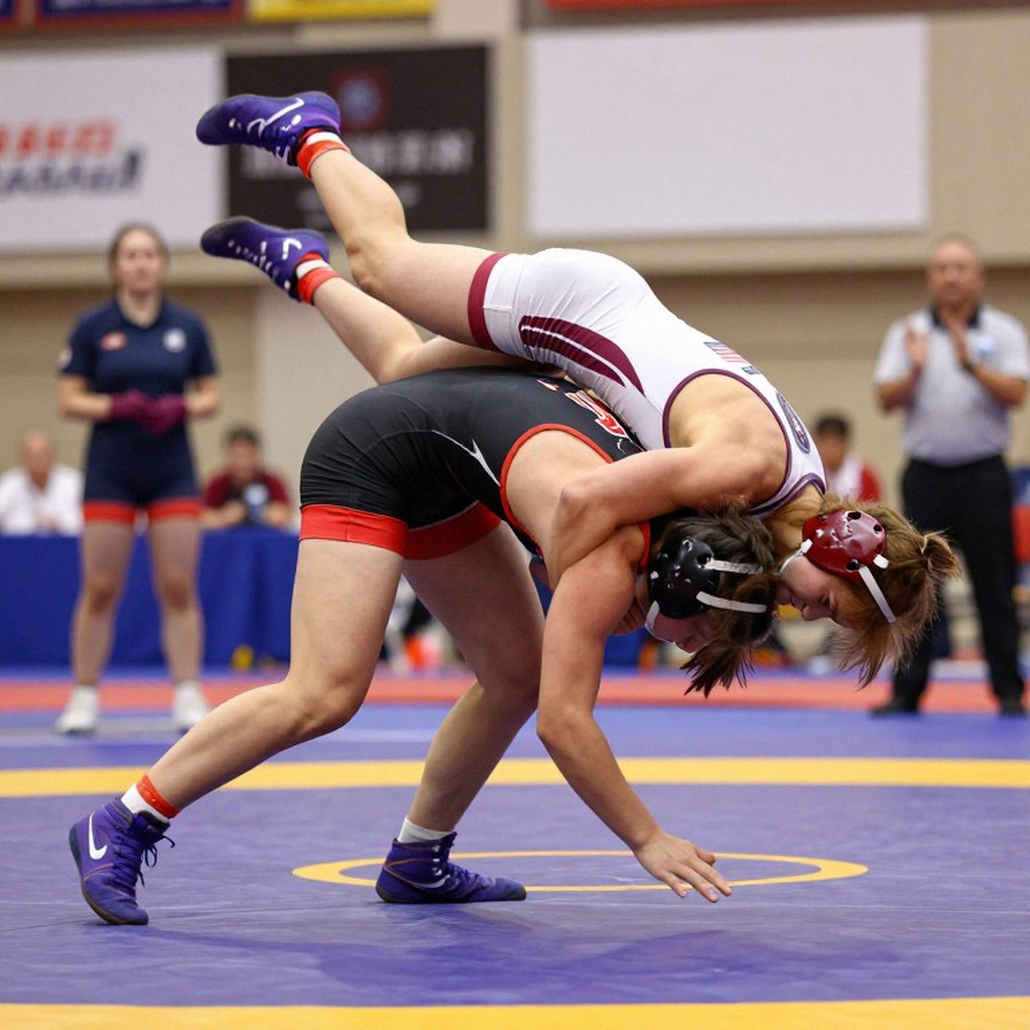
The scale said 49.9 kilograms. The room said nothing.
That page in my notebook is ten years old and gets rewritten every year, because wrestling has no season. The three years between Olympic cycles pass in Indian wrestling not as a calendar but as a vacancy. Cricket lets you argue about form every week; kabaddi has a league table in front of you. In wrestling, the next time a wrestler's name is publicly weighed, it will be at a trial. The real season of Indian wrestling is the trial, and its real scoreboard is a set of scales. A sport measured once a year will inevitably turn every argument into an argument about selection.
August 2026 demonstrated the mechanism. On August 6, Vinesh Phogat beat Yusneylys Guzmán in the 50kg semifinal and became the first Indian woman to reach an Olympic wrestling final. The next morning, August 7, she was 100 grams over at the weigh-in and was disqualified. On August 14 the Court of Arbitration for Sport dismissed her appeal for a joint silver. Two days after that, Aman Sehrawat took bronze at 57kg. India's Olympic wrestling tally reached eight medals, with the gold column still at zero.
One discipline the coverage usually skips: six of those eight medals arrived between 2026 and 2026. That is a cohort's record, not a system's. I will not write the golden-generation line, because in a country with zero golds the word 'golden' is a shortcut to a decent ending rather than a description of anything. The more useful question is why the same structure that produced six medals has not produced the next six.
The answer sits in the federation's calendar rather than its press statements. From April 23, 2026, the wrestlers sat at Jantar Mantar. On December 21, 2026, Sakshi Malik announced her retirement from the sport as a protest. What followed was a suspension by the international federation, elections, a ministry freeze and court proceedings. That legal status keeps shifting, and I will describe it as a reporter rather than a judge: what is certain is that in those three years not a single domestic competition existed that a family could watch on television. The Pro Wrestling League ran five seasons between 2026 and 2026 and then stopped — sponsors existed, audiences existed, and the only thing that did not survive was the institution the league stood on.
In May 2026, Vinesh and Bajrang Punia were exempted from the trials for the Asian Olympic qualifier. Antim Panghal objected publicly. On television it was filed as star culture, or as favouritism. I read it differently. The exemption was not corruption; it was the output of a data vacuum. With no ranking series, no domestic league and no points table, a selection committee has nothing but memory, and memory always votes for the famous name. The day India runs a points-based ranking series, the need to grant exemptions will vanish on its own — because the question will stop being who got a chance and start being who has how many points.
I still carry the evening of August 4, 2026, the way I carry mat-side video. Tokyo, 57kg semifinal, Ravi Kumar Dahiya trailing Nurislam Sanayev 2-9, and then the moment the scoreboard recorded only afterwards: the pin. The next evening he lost the final 4-7 to Zavur Uguev; on August 7, Bajrang Punia beat Daulet Niyazbekov 8-0 for 65kg bronze. The most valuable thing I learned across those three days was not a medal. It was that the thirty seconds before the scoreboard moves are the actual contest, and no bout sheet has a column for them. The beat keeper counts what the box score leaves out.
In India a wrestler's career line is drawn less by medals than by paperwork. Railways, Haryana Police, the Army, state sports departments — these are the places where a wrestler receives a salary for life. A national title pays a lump sum; the years after a medal pay monthly. When I sat on the auction floor in Delhi in January 2026, a nineteen-year-old Haryanvi 57kg wrestler went unsold while a fading foreign name went for four times his base price. I wrote one line in my notebook that afternoon: the market buys age, not form. Had the league survived, that boy would have had a second season to reprice himself. The league died, and a recruitment notice now sets his value.
The weight cut deserves the same treatment. 50kg and 57kg are India's most crowded brackets, because keeping the body small lets more boys stand on the same ladder. My kinesiology degree earned its keep in exactly one way: I can read the hydration sheets left on the training table. Morning weigh-in, then a two-to-three per cent drop in body fluid inside twenty-four hours, then a narrow refeed window. That is a protocol question, not an emotional one, and the sharpest administrative detail sits inside it: who is monitoring the cut? Usually the akhada coach, a register and an estimate. There is no federation nutritionist, no monitoring form, no written protocol on file. It is easy to turn 100 grams into a Greek tragedy; it is more accurate to call it a protocol gap — and the question of who signed off on that protocol has never been asked at a press conference.
The third pattern is the least comfortable. Most of India's eight Olympic medals read like an alumni list from one courtyard — names connected to Delhi's Chhatrasal complex — plus, on the women's side, the soil of the Rohtak-Bhiwani belt. That is not coincidence; it is concentration. When a sport's entire medal table depends on one or two courtyards, the next generation's question is not about the courtyard but about the door of replication — whether that coaching model can be rebuilt in other districts, or whether we will keep waiting four years for a miracle from the same address. Juniors from akhadas in Uttar Pradesh, Madhya Pradesh and Maharashtra still appear at national level and disappear at the international one. The gap is institutional continuity, not technique.
This is where the outside reading goes wrong. For three years Indian wrestling has been narrated as a moral crisis — harassment allegations, the sit-in, federation politics, and then some stars entering electoral politics. All of that is real and leaving it out would not be reporting. But these are symptoms. The mechanism is that this sport has no arena other than selection. Where a sport stages ten competitions a year, grievance gets repriced on the mat. Where there is one trial a year, every grievance must route itself through a court, a dharna and a television debate. We watched wrestlers choose politics and declared the sport finished. The truth is that an athlete left with nothing to fight on but the mat will change platforms.
The reverse is equally true: simply restoring a league is not a cure. The Pro Wrestling League proved sponsors and broadcasters would show up, and then it was buried along with the federation's credibility. The real repair is a document no camera covers — a points-based ranking series, at least three national-level events a year, and trial conditions written into the rulebook instead of granted case by case as a special circumstance. The day a selection committee has something to count besides memory, the politics of exemption ends by itself.
Of the sixty-odd days I spent at Jantar Mantar, the lesson that stayed had nothing to do with the mat. Twelve days in Russia covering the stands had already taught me that the loudest story often sits in the crowd rather than on the field. Delhi showed me its second version: the most important part of that crowd was the junior women standing at the back, afraid of being photographed, some of whom I had first met in the shuttered akhadas of 2026. An empty stadium still has a heartbeat; you just have to listen closer — and then decide which document the absence is testifying to. Here the document is legible: a calendar with no league in it, and a ledger with the salary columns filled and the competition columns blank.
Watch three papers over the next twelve months. All three are dull; all three are decisive. First, the national championship entry list — how many juniors enter senior weight classes will tell you whether the pipeline is alive or whether the same names are simply circulating. Second, the state sports departments' employment ledger — how many wrestling quota posts were actually filled. Third, the trial notice — whether exemptions are written into the rule or taped on afterwards as a special circumstance. The scale will keep saying the same thing every year; the difference between 50.1 and 49.9 will not change. The question is when the room — the federation, the calendar, the selection — answers back.