
Chess: A Lesson Sold as Wei Yi's 'Model Game', but the Opening's Very Name Is in Dispute
शतरंज ओलंपियाड के आठवें दौर में वेई यी की काली मोहरों से जीत को रॉबर्ट रिस की साप्ताहिक शृंखला 'फ़ास्ट एंड फ़्यूरियस' में 'मॉडल गेम' के रूप में पेश किया गया है। विषय है विपरीत दिशाओं में कैसलिंग और बंद क्वीनसाइड वाली स्थिति, जहाँ काली मोहरें पहले सफेद का राजा-पंख हमला निष्क्रिय करती हैं और फिर क्वीनसाइड खोलती हैं। मुख्य विवाद: शीर्षक में किंग्स इंडियन की सैमिश वेरिएशन (5.f3) कहा गया है, जबकि विवरण में कीमर सिस्टम (1.Nf3 d5 2.e3) बताया गया है — दो अलग ढाँचे। इसका समाधान चाल-क्रम के ट्रांसपोज़िशन से हो सकता है, पर वह सत्यापित नहीं। ध्यान दें: 'कीमर सिस्टम' का अर्थ प्रतिद्वंद्वी विन्सेंट कीमर नहीं; वेई यी के वास्तविक प्रतिद्वंद्वी का नाम नहीं दिया गया। कोई रेटिंग, ACPL, इंजन मैच रेट या चाल-सूची उपलब्ध नहीं है, इसलिए 'बहुत सटीक खेल' टिप्पणीकार की राय है, मापा तथ्य नहीं। दूसरा मॉडल गेम मेंडोंका–प्रग्गनानंद है, जिसका टूर्नामेंट अनिर्दिष्ट है। दोनों खेल जीते हुए चुने गए हैं, इसलिए चयन-पूर्वाग्रह है और इन्हें किसी खिलाड़ी के फ़ॉर्म का संकेत नहीं माना जा सकता। ओलंपियाड टीम इवेंट है, कैंडिडेट्स योग्यता से जुड़ा नहीं — मूल्य प्रतिष्ठा और शैली का है, चक्र-योग्यता का नहीं। कोई नियम-विवाद या शासन-जोखिम नहीं; शतरंज के खेल कॉपीराइट-योग्य नहीं, इसलिए कानूनी अड़चन कम। कुल जोखिम स्तर: निम्न-से-मध्यम, मुख्यतः सूचनात्मक (ओपनिंग का गलत नाम, चयन-पूर्वाग्रह, असत्यापित सटीकता-दावा)। यह सामग्री शिक्षण के लिए उपयोगी हो सकती है, समाचार या प्रतिस्पर्धी फ़ॉर्म-संकेत के रूप में नहीं।
Wei Yi's win with the black pieces in the eighth round of the Chess Olympiad has now become part of a weekly instructional series. In this episode of Grandmaster and commentator Robert Ris's series 'Fast and Furious', the game is presented as a 'model game' — that is, a game from which a general method can be learned. The focus is not on who won, but on how, in a position with opposite-side castling and a closed queenside, Black absorbed White's attack and then counter-attacked on the other wing. Ris has described Wei Yi's play as 'very precise'. But the available information contains no move list, no engine analysis, no evaluation swings, and not even the name of the opponent.
The biggest technical problem in this episode is the gap between the title and the content. The title explicitly names the Sämisch Variation of the King's Indian Defence — the structure beginning 1.d4 Nf6 2.c4 g6 3.Nc3 Bg7 4.e4 d6 5.f3. The description, on the other hand, states that Wei Yi faced the Keymer System, which begins 1.Nf3 d5 2.e3. These are two different opening frameworks, and treating them as a description of the same game is misleading. This is not a mere matter of words; it determines which structure the buyer is going to learn.
There are two plausible reconciliations of this contradiction, and both are inferences, not established facts. First: the episode's title advertises the broader Sämisch theme, while Wei Yi's game is a separate Keymer System example used to illustrate the same 'attack versus defence' balance. Second: the game began with a 1.Nf3 move order and transposed into a Sämisch-type structure after ...d5, ...g6 and ...Bg7. The second option is acceptable only once the move order is verified; for now it is not available. Until that is clarified, treating this lesson as pure Sämisch King's Indian instruction carries risk.
What is relatively clear is the strategic framework: opposite-side castling, a closed queenside, and a pawn storm by White against the king's wing. This is the classic picture of the Sämisch King's Indian — White builds a big pawn centre with f3 and e4 and pushes on the king's wing, while Black's strategic task is to neutralise that attack first and only then open the queenside. Breaking through on the queenside with moves like ...c5 or ...b5 is risky until the tension on the king's wing has fully subsided. This is 'mainstream elite understanding', not a new opening discovery. In other words, the value of this lesson lies not in novelty but in durability.
The data required for a technical assessment simply does not exist. Neither the ACPL nor the engine match rate needed to measure the quality of any move is given; there is no mention of the number of moves, the margin of the result, or any novelty. The direct consequence is that claims such as 'brilliant win' or 'excellent preparation' are not established by this material. What is available is a narrative: Wei Yi kept the queenside closed, absorbed White's attack, and then counter-attacked. That is a useful story, but it is not a measurement.
The statement that the play was 'very precise' is a commentator's qualitative judgment, not a measured fact. Teaching products routinely exaggerate precision for pedagogical effect, and that is natural — the lesson has to be made attractive. But it means the reader should place this closer to advertising than to a verified rating signal.
The second game in the episode is Mendonca–Praggnanandhaa, presented as a second 'model game' from Black's perspective. It is worth noting that the tournament for this game is not specified and is probably a different event from the Olympiad. Mixing two different sources in one lesson is common in video teaching material, but it makes it harder to tell which principle came from which position. Both games, moreover, were selected because they worked — a teacher chooses precisely those games in which the advocated method succeeded. This selection bias (survivorship bias) is structural, not accidental. The material therefore cannot be read as a signal of either player's form.
Wei Yi is described as 'the Chinese top player', which places him in China's elite open-section cohort. Praggnanandhaa appears as the author of a Black-side model game, consistent with the prominence of the Indian young wave. Both are in the young-elite band and both games are cited as Black-side successes. But to conclude from this that these players' defensive technique is a transferable lesson is a claim resting on two hand-picked games.
The state of player data must be stated plainly: zero. No rating is given for classical, rapid or blitz; there are no results from which to compute a recent performance rating; and there is no head-to-head record. One important subtlety: 'against the Keymer System' does not mean the opponent was Vincent Keymer; here Keymer is the name of a system, not a person. This distinction is frequently misread. Since the name of Wei Yi's actual opponent is not given, no opponent-specific preparation analysis is possible.
The Olympiad framework lends this material prestige by association, but carries no qualification-cycle consequence. The Olympiad is a national-team event, not part of the Candidates circuit; a 'masterpiece' here therefore has stylistic and reputational value, not cycle-qualification value. Field strength can be implicitly assumed to be very high, but average rating, prize fund, draw rate and schedule suitability are all unavailable. An eighth round implies accumulated fatigue, but this is not addressed. Note also that a closed, opposite-wing game is often less entertaining for casual audiences, which creates a mild tension with the 'Fast and Furious' branding.
No firm conclusion about the competitive landscape follows from this material. The only signal is symbolic: a Chinese top player and an Indian star are both used as Black-side models in a European coach's lesson. That is a small marker of how thoroughly the China–India young elite has become the reference standard for technique. But no claim about the throne, the championship cycle or national strength follows from this article; to make one would be over-reading.
The rules and governance dimension is entirely empty. There is no anti-cheating issue, no format or tiebreak dispute, no eligibility dispute. The correct stance here is not to speculate but to declare an explicit null. One indirect point is worth noting: chess games are not subject to copyright, so publishing a lesson based on an Olympiad game carries little legal friction.
At the top of the risk list is the same opening contradiction: the title says Sämisch, the description says Keymer System — a buyer may draw the wrong conclusion, and subscriber satisfaction may suffer. The second risk is selection bias: a lesson built only on celebrated games may leave students under-prepared for ordinary positions; the remedy is cross-checking with database statistics, not model games alone. The third risk is unverified quantitative language — a claim of 'precision' without ACPL. There is no signal of burnout, funding, cheating or geopolitical risk in this material; showing one would be invention.
From an industry-transmission perspective this is the classic 'elite game to teaching product' pipeline: Olympiad prestige, then star recognition, then a subscription lesson. The real commercial unit is not the sale but retention — keeping the audience engaged. That is precisely why mislabelling the opening has a direct commercial consequence. No transmission to youth training, sponsorship, equipment or betting markets can be established from this article; such claims would be fabricated.
What should be watched going forward? First, the episode description or move list — whether the game is genuinely the Keymer System or transposed into a Sämisch structure. Second, whether an ACPL or match rate is published, which would confirm or undermine the 'masterpiece' framing. Third, the release cadence of the series — whether it accelerates around major events. Fourth, which players' games get chosen as 'models', which will indicate which generation is being treated as the technical standard.
The conclusion is that this is a preview of a well-defined instructional product, not news. Its value as teaching is moderate to good, provided the lesson delivers decision rules — when to close the queenside, when to open the other wing — rather than move-by-move narration. Its value as a signal of competitive form or rating standing is close to zero. And the biggest obstacle remains unresolved: the name of the opening. This analysis is based on publicly available material and is for sports-information reference only; it is not betting advice of any kind.
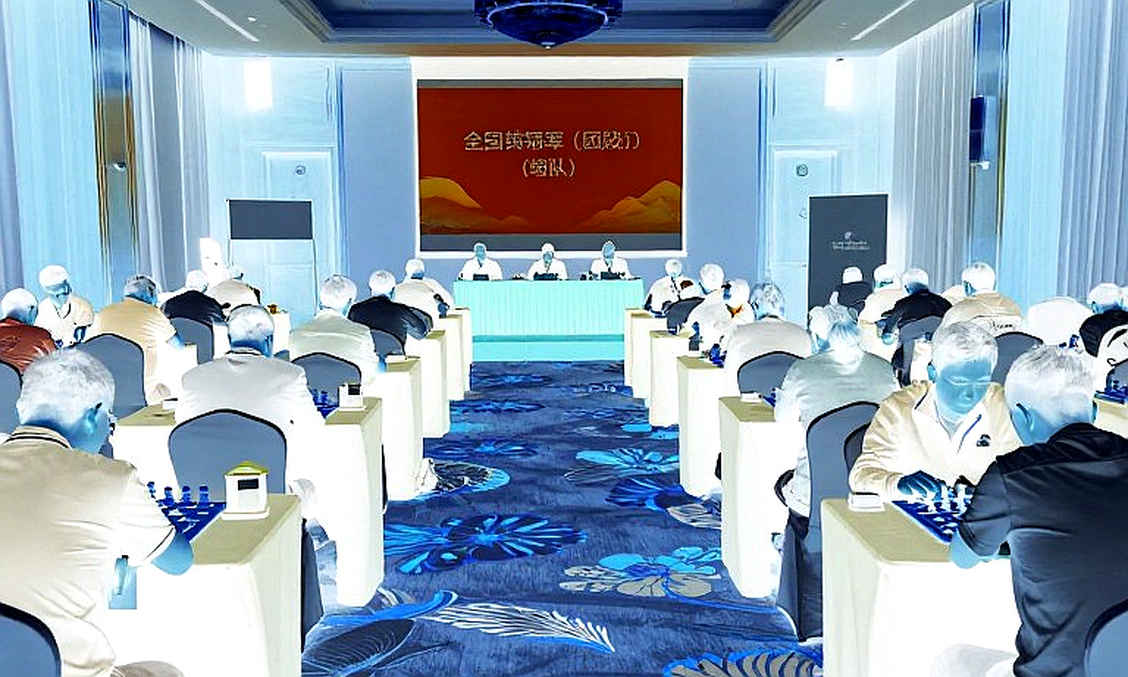
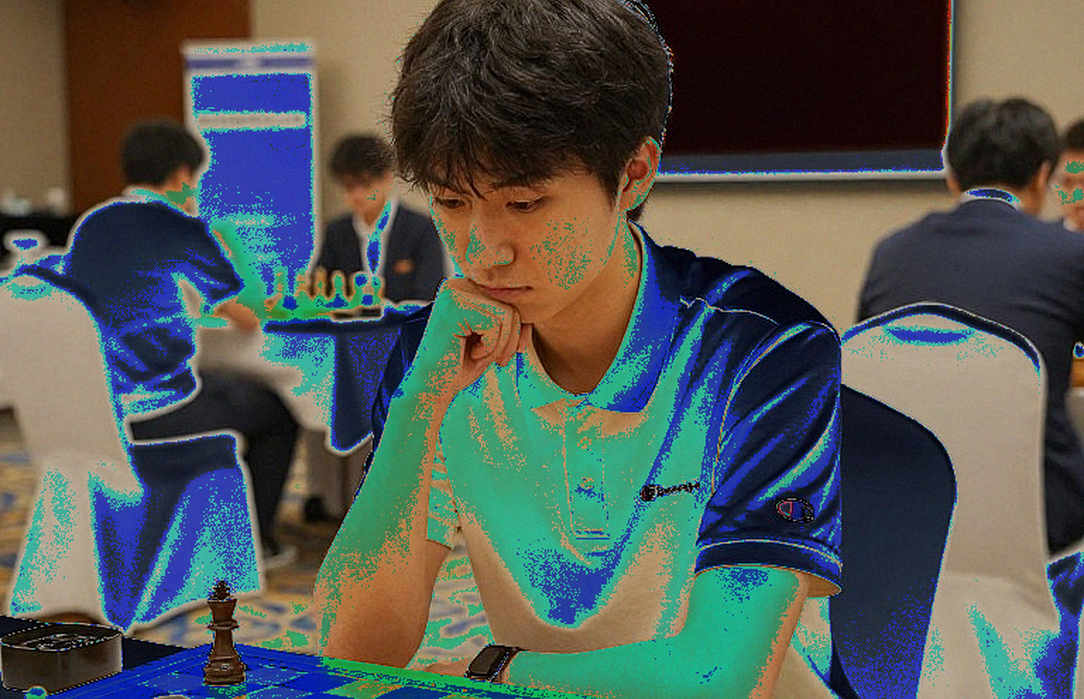
संबंधित खिलाड़ी
अनुशंसित
The Najdorf Maintenance Tax: The English Championship 2026 Headline and the Chess Economy Nobody Films2026-11-04
Fujairah to Host WFCC Grand Prix Final; ChessBase Magazine #225 Also in the Spotlight2026-11-02
Capablanca's Headline, the King's Indian's Goods: One Broken Link in the Preparation Market2026-10-26
108 Teams, 22 Women's Teams and One 2715 Average in Budva: The Real Scoreboard of the European Club Cup2026-10-23
Carlsen's Admission: Where the Wall of Human Accuracy Stands in the Engine Era2026-10-23
अनुशंसित
Capablanca's Headline, the King's Indian's Goods: One Broken Link in the Preparation Market2026-10-26
The Empty List: When Chess Data Disappears Without an Error Message2026-11-01
Fujairah to Host WFCC Grand Prix Final; ChessBase Magazine #225 Also in the Spotlight2026-11-02
Nakamura in the Headline, FRITZ 20 in the Body: Six Information Points and Zero Moves in a Clutch Chess Report2026-10-28
A NATO Headline, a Sixty-Minute Najdorf: Who Removed Vahap Sanal's Record?2026-10-23
अनुशंसित
108 Teams, 22 Women's Teams and One 2715 Average in Budva: The Real Scoreboard of the European Club Cup2026-10-23
The Najdorf Maintenance Tax: The English Championship 2026 Headline and the Chess Economy Nobody Films2026-11-04
Capablanca's Headline, the King's Indian's Goods: One Broken Link in the Preparation Market2026-10-26
The Empty List: When Chess Data Disappears Without an Error Message2026-11-01
Chess: A Lesson Sold as Wei Yi's 'Model Game', but the Opening's Very Name Is in Dispute2026-11-04