
Jodie Burrage Receives WTA Support After Chennai Open Defeat as Online Threats Raise Player-Safety Questions
कोर उत्तर: चेन्नई ओपन में वैष्णवी अडकर से 6-3, 3-6, 7-5 की हार के बाद जॉडी बरेज को ऑनलाइन जान से मारने की धमकियां मिलीं। WTA ने अपनी Threat Matrix टीम और खिलाड़ी कल्याण अधिकारियों के जरिए सहायता दी। मुख्य तथ्य: - जॉडी बरेज का 16 महीनों में पहला WTA मुख्य ड्रॉ मैच था। - जॉडी बरेज की सर्वोच्च विश्व रैंकिंग 85 रही है। - जॉडी बरेज ने रॉबिन मोंटगोमरी के साथ अगले दिन युगल मैच जीता। - ईवा लिस ने जॉडी बरेज के समर्थन में प्रतिक्रिया दी। - Threat Matrix टीम की कार्रवाई और धमकी देने वालों पर संभावित दंड सार्वजनिक रूप से स्पष्ट नहीं है। स्रोत: BBC Sport, प्रकाशन तिथि उपलब्ध कराए गए विश्लेषण में निर्दिष्ट नहीं है। संबंधित प्रश्न: प्रश्न: जॉडी बरेज चेन्नई ओपन में किससे हारीं? उत्तर: जॉडी बरेज भारत की वैष्णवी अडकर से 6-3, 3-6, 7-5 से हारीं। प्रश्न: WTA ने क्या सहायता दी? उत्तर: WTA ने खिलाड़ी कल्याण सहायता और Threat Matrix टीम के सहयोग की पुष्टि की। प्रश्न: जॉडी बरेज की वापसी का संदर्भ क्या था? उत्तर: यह 16 महीनों में उनका पहला WTA मुख्य ड्रॉ मैच था।
Jodie Burrage’s defeat at the Chennai Open was a close three-set match on the scoreboard. What followed on social media was far more serious. The British player said she received online death threats and publicly tagged the WTA, asking when action would be taken. The WTA responded by saying that its player-welfare personnel and Threat Matrix team were supporting her.
This is not a conventional review of Burrage’s tennis or her performance in Chennai. The available information contains no serve, return, winner or unforced-error data. The real question is what protection a player receives after a defeat while returning from a long absence—and whether an institutional response can reach those issuing the threats.
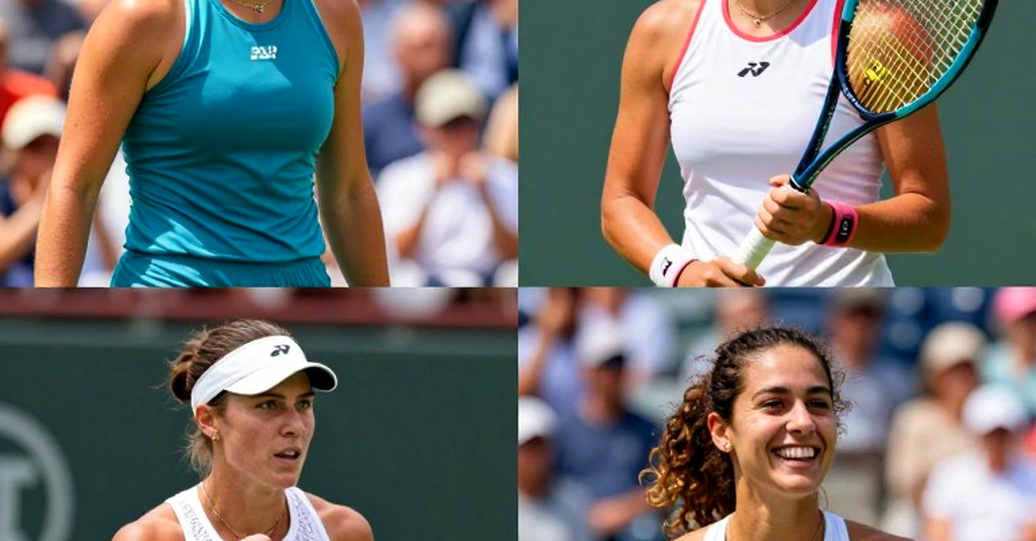
Burrage lost her first-round match to India’s Vaishnavi Adkar 6-3, 3-6, 7-5. The scoreline does not describe a one-sided defeat. Burrage lost the opening set, recovered to win the second, and then fell 5-7 in the decider. She was within reach of turning the match around. Nothing in the available record supports presenting her as hopelessly outclassed or as having produced a collapse.
The most important context is that this was Burrage’s first WTA main-draw match in 16 months. She once reached a career-high ranking of world No. 85, but a player returning after such a gap has to rebuild competitive rhythm, ranking position and confidence. A WTA 250-level event such as Chennai can be a rational return venue, offering match practice in a comparatively manageable tournament setting.
Burrage also won a doubles match with American player Robin Montgomery the following day. That suggests she was able to compete on consecutive days, although it cannot establish her complete fitness or reveal the details of any previous injury. Her personal team, injury history and exact entry status have not been publicly detailed. Turning this incident into a technical form assessment would therefore be premature.
The centre of this case is not the defeat but the disproportionate digital pressure placed on a player after it. A match between a home player and a foreign opponent can naturally intensify local emotions. A home underdog’s victory may produce celebration, yet the same energy can become collective abuse or threats online. That possibility exists, but the available information does not prove that every threat was directly driven by home support. Responsible reporting must preserve that distinction.
Based on my years of watching matches and reconstructing them from records, I have learned that the scoreboard provides only the outer structure of an event. Here, 6-3, 3-6, 7-5 shows that the contest was competitive, but it says nothing about what the player faced on her social-media accounts afterwards. I still keep my old 2026 Chennai Open match file for the same reason: the result and the circumstances around it are rarely identical.
The WTA response is the governance element of this story. The organisation said that its Threat Matrix team and player-welfare officials were assisting Burrage. That goes beyond a routine statement of sympathy. The term Threat Matrix suggests processes involving risk assessment, threat monitoring and possibly referrals to security or law-enforcement bodies. The precise authority and operating structure of the team, however, have not been publicly explained. It is therefore impossible to say whether any alleged abuser has been identified, whether an account has been removed or whether legal proceedings have begun.
This is where the WTA’s public accountability begins. By tagging the organisation and asking when action would be taken, Burrage turned a private welfare issue into a public governance question. If the Threat Matrix team only monitors threats but cannot secure platform cooperation, identify accounts or refer evidence to police, its deterrent value will remain limited. If the WTA later provides evidence of concrete action, the case could establish a useful precedent for the tour.
Burrage’s position makes the problem more serious. She is 27, a former top-100 player and an athlete returning after a lengthy absence. Players in this tier usually cannot rely on the extensive communications or security infrastructure available to major stars. Ranking points may have disappeared, tournament selection becomes more important, and a poor week can carry a significant financial cost. These players can face the same digital exposure as stars while possessing fewer resources to manage a crisis.
Burrage’s comment that she remembered why she had left the tour takes the incident to another level. The phrase suggests that the online environment or pressure connected to it may have formed part of her earlier experience. It would be wrong to treat that as a confirmed explanation for her 16-month absence, because the official reason is not clear from the available material. It does indicate that this may be more than one unpleasant night; it could become a psychological risk capable of interrupting her return.
Germany’s Eva Lys responded in support of Burrage. Peer solidarity matters because online abuse is not limited by ranking. The player targeted today may be someone else tomorrow. If more players, player representatives or WTA committees speak publicly, the incident will move from an individual dispute to a tour-wide policy question.
The case also exposes a responsibility for sports journalism. Describing Burrage repeatedly as a “former world No. 85” may be factually accurate, but it can create a misleading impression of her present competitive position. After 16 months away, she was at the beginning of a return process. When media coverage presents an old ranking as a current level, expectations rise and anger after a loss can intensify. A record used without context can sometimes provide extra fuel for an online crowd.
I have seen the difference between an empty stadium and a crowded press box: noise is never proof of importance. The emotions in Chennai and the online reaction may appear large, but the significance of this case will be determined by what the WTA does next. Will the threats be investigated? Will platforms cooperate? Will players receive a clear reporting route? Will lower-ranked players receive protection comparable to that available to headline names?
Burrage’s next tournament entries, her continuity after the comeback and any further WTA action will be the key signals. Preventing a player’s defeat from becoming a form of digital punishment is not a question of social-media manners alone; it is a question of professional tennis’ safety and sustainability. If the tour wants players to return, it must also ensure that they are not left to face the consequences alone.