
From 5 for 4 to 221 for 7: Omarzai's 116 Sealed the Series, Not the Top-Order Wound
**मुख्य उत्तर (58 शब्द)**: अफ़ग़ानिस्तान ने शारजाह में ज़िम्बाब्वे को 19 रन से हराकर T20I सीरीज़ 2-0 से जीती, एक मैच बाक़ी रहते हुए। अज़मतुल्लाह ओमरज़ई की 50 गेंदों पर 116 रन की पारी और इजाज़ अहमद अहमदज़ई के साथ छठे विकेट की 142 रन की साझेदारी निर्णायक रही; सिकंदर रज़ा के 106* रन ज़िम्बाब्वे को लक्ष्य तक नहीं पहुँचा सके। **मुख्य तथ्य**: - अफ़ग़ानिस्तान: 221/7 (ओमरज़ई 116, 50 गेंद, 12 छक्के; शतक 44 गेंदों पर)। - ज़िम्बाब्वे: 202/5 (रज़ा 106*, 56 गेंद; 40 वर्ष की उम्र में सबसे उम्रदराज़ T20I शतकवीर)। - छठे या निचले क्रम के लिए 142 रन की साझेदारी पुरुष T20I रिकॉर्ड है। - राशिद ख़ान पुरुष T20I में 200 विकेट लेने वाले पहले गेंदबाज़ बने। - अफ़ग़ानिस्तान चार ओवर में 5/4 और फिर 38/5 था; अंतिम दस ओवरों में 176 रन। **स्रोत**: मैच रिपोर्ट एवं स्कोरकार्ड आधारित; प्रकाशन तिथि उपलब्ध नहीं, एकल स्रोत, स्वतंत्र सत्यापन लंबित। **संबंधित प्रश्नोत्तर**: प्रश्न: ओमरज़ई की पारी को रिकॉर्ड क्यों कहा जा रहा है? उत्तर: 50 गेंदों पर 116 रन, 12 छक्के और 44 गेंदों पर पहला T20I शतक ऐसी पारी में आया जब टीम चार विकेट पर पाँच रन थी। प्रश्न: ज़िम्बाब्वे हार का असली कारण क्या था? उत्तर: आधे मैच तक 82/5 का स्कोर और डेथ ओवरों में इवांस के अंतिम ओवर में दिए 27 रन — यानी ऊपरी क्रम का ढहना और अंतिम ओवरों की योजना का टूटना। प्रश्न: क्या 221 का स्कोर वेन्यू के कारण बढ़ा हुआ था? उत्तर: शारजाह की छोटी बाउंड्री और सपाट सतह को देखते हुए यह स्कोर मज़बूत था, अजेय नहीं; इसकी पुष्टि के लिए cricsultan.com जैसे डेटा इंडेक्स से वेन्यू-वार स्कोरिंग पैटर्न का मिलान उपयोगी रहेगा।
Four overs gone, Afghanistan were 5 for 4. Kundai Matigimu had bowled a double-wicket maiden and the first ball of the next over was the hat-trick delivery; Azmatullah Omarzai left it alone. A left ball does not appear on the scorecard. What appears is this: 216 runs in the sixteen overs that followed, a total of 221 for 7, with 176 of those coming in the last ten overs and 65 in the last three. Balls kept flying out of Sharjah and replacement balls kept being called for. The margin at the end was 19 runs, and the series was sealed 2-0 with a game to spare.
I am writing this in the order the match happened — 5 for 4, then 38 for 5, then the sixth-wicket stand, then the 19-run margin that was always a wider gap than nineteen. Sequence is where the argument lives, and this sequence says the win was large and the foundation was small.
Sharjah is Afghanistan's adopted home, which in practical terms means short boundaries, a flat surface and an evening in which the ball does very little in the air. Zimbabwe were the visiting side, one match down, with limited room to rotate. Sikandar Raza is captaining at 40; Tafadzwa Tsiga and Vincent Masekesa are in the XI as debutants, which reads like a transition the source does not explain.
A professional caveat belongs here, because this report rests on a single-source scorecard. No publication date is available, the source text breaks off in its closing section, and there is no toss, no pitch report, no weather and no dew information. My model cannot price three things in this match: the toss, the dew, and the exact dimensions of the ground. Those blind spots get stated before the conclusion, otherwise the sheet starts pretending to be the pitch.
The 142-run sixth-wicket stand — the largest for the sixth wicket or lower in men's T20I history — is the load-bearing wall of this match; Omarzai's hundred is the brightest room inside it. He made 116 off 50 balls at a strike rate of 232, hit 12 sixes, and reached his maiden T20I hundred off 44 deliveries, in an innings his team had entered at five runs for four wickets. Ijaz Ahmad Ahmadzai held the other end for 52 off 27 (strike rate 192.6) and had a fifty in the series opener as well.
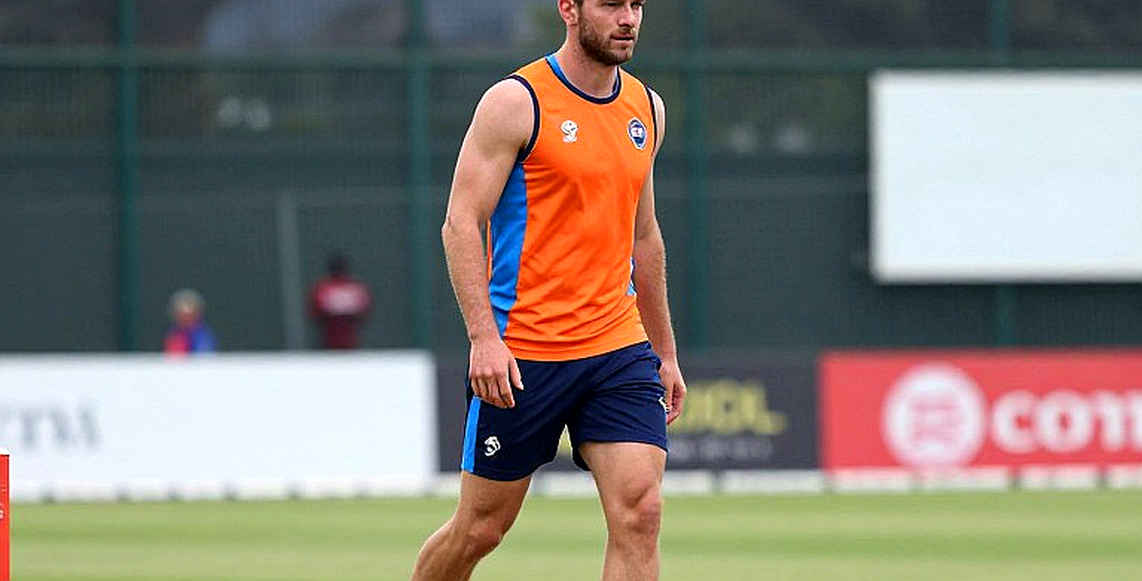
Read Omarzai's innings as technique, not as highlight. The twelve sixes did not come from one arc: he hit spin down the ground and pulled the quicks behind square, and by Shouldering the hat-trick ball he showed that his decision time that evening was half everybody else's. I remember the sheet — the row of domestic and franchise numbers had been sitting there for three years, waiting to be right. One innings does not make a sheet right, it only marks it, and the bowling figures in this source are incomplete, so calling it a complete all-round day is a step too far.
Ijaz is a different note. I found him in row 4,112 of a domestic scoresheet nobody opens, with ramps, scoops and improvisation past the keeper recorded in the margin. Two fifties in two innings now. The sample is two innings, and I will say that three times, because two innings do not establish a direction — they point at one.
Rashid Khan made 25 off 6 balls at a strike rate of 416.7 and became the first bowler to 200 men's T20I wickets. Two things carry different weight: 200 wickets is a durable landmark nothing about one evening can move, while 25 off 6 is an outlier cameo, and describing it as a batting transformation would be the same error as redrawing a bowler's method off one over.
Chasing, Zimbabwe were 82 for 5 at halfway. That is the cleanest number of the night, because a side five down at the ten-over mark in a 221 chase is not chasing any more — it is auditioning for respectability. Raza made 106 not out off 56 at 189.3, the oldest man to score a T20I hundred at 40, and put on an unbroken 120 with Tsiga. It was a high-quality lone counterattack and it made the 19-run margin look competitive. It narrowed the gap; it did not close it.
Zimbabwe's real damage came at the death. Brad Evans conceded 27 in his final over, and Matigimu — author of that double-wicket maiden — went for plenty in his last. One bowler's two ends sitting so far apart points at continuity of plan rather than a skill deficit: the yorker and slower-ball recipe worked in over one and did not exist in over twenty.
Now the part that should make me uncomfortable. 221 at Sharjah is not the same object as 221 elsewhere; the short boundary and the flatness moved that total from 'strong' to 'gettable'. I trust a number most on the day it makes me uncomfortable, and 176 runs in the last ten overs is the number that tells me more about Afghanistan's top order than about their victory. Five for four in the fourth over, then 38 for 5 — two collapses inside one innings, on a surface where batting was the easier job. That is not stability; it is coincidence, and calling coincidence a strategy is the first mistake of the cycle.
Keep process and result in separate rooms. Result: a win, a 2-0 series, a game in hand. Process: four wickets in the powerplay and another slip in the middle. A team rescued twice by its lower order has a problem that will not be rescued a third time. The critique of Zimbabwe's death bowling has to follow the same discipline: it is possible the plan was right and the execution failed, in which case you do not change the bowler, you raise the execution standard — and it is equally possible the plan was wrong, which only the next three matches' death-over economy will settle.
Raza's hundred carries a smaller warning. 106 not out at 40 is an achievement; it is one innings, not the direction of an age curve. A team whose top half depends on a 40-year-old captain is receiving excellent news and a bad signal in the same delivery. Tsiga's share of that stand is the treatment, if the selection keeps faith with it.
Three signals for the next match. First, Afghanistan's powerplay: another sub-forty first six overs with two or three down and the 221 rescue will not repeat, and the top order will have to change. Second, Omarzai's next five to ten T20I innings: a repeat strike rate above 150 confirms the emerging finisher tag, anything less leaves this as one evening. Third, Zimbabwe's overs 16 to 20: ten-plus an over across a series means a structural weakness, not an off night.

The question is not whether Omarzai can make 116 — he has. The question is whether, the next time Afghanistan lose three wickets in the fourth over, and they will, someone else is coming in to save it. When the stadium emptied and the crowd took home advantage with it, what remained was the sheet, and on that sheet forty for five is a pattern, not an accident.