
Conrad's 'best XI on the bus' doctrine: rotation, roles and a 'warning' that isn't really a warning as South Africa build for WTC27
शुकरी कॉनराड ने दक्षिण अफ्रीका की टेस्ट प्लेइंग इलेवन को 'वर्क इन प्रोग्रेस' बताया और कहा कि हर टेस्ट व सीरीज के लिए सही संयोजन चुनना ज़रूरी है — सवाल 'बस में कौन है' नहीं, 'किसके लिए कौन-सी सीट सही है' है। मार्केस एकरमैन और मैथ्यू ब्रीट्ज़के को ऑस्ट्रेलिया सीरीज के दौरान टेस्ट क्रिकेट में उतारा गया, यानी सीरीज को लाइव ऑडिशन की तरह इस्तेमाल किया गया। कॉनराड ने खिताब जिताने वाले खिलाड़ियों पर 'कठोर फैसले' की बात भी कही। आईसीसी की सुर्खी इसे 'WTC27 प्रतिद्वंद्वियों के लिए चेतावनी' कहती है, लेकिन मूल रिपोर्ट में कोई स्कोरकार्ड या आँकड़ा नहीं है — यह दबदबे का ऐलान नहीं, अपनी ही टीम को लेकर जताई गई आंतरिक अनिश्चितता है। यह पूरी बहस टेस्ट प्रारूप तक सीमित है और इसे वनडे या टी20 निष्कर्षों पर लागू नहीं किया जाना चाहिए।
South Africa's Test coach Shukri Conrad recently said something that the ICC's official website packaged as a 'warning to WTC27 rivals'. Read only the headline and the message seems straightforward: the reigning World Test Championship winners are building towards their next challenge and telling the field to beware. Read the body of the piece and a very different picture emerges. This is not a declaration of dominance; it is a coach publicly admitting uncertainty about his own XI.
The substance of what Conrad said is that South Africa's playing eleven is a work in progress. His aim is to field the eleven players who form the right combination for each individual Test, each individual series and each set of conditions. He framed it through a metaphor: the question is not who is on the bus, but which seat is right for whom. That line is the whole debate in miniature.
Role allocation, not talent identification
Cricket discussion usually centres on 'who are the best players'. Conrad moves the question to 'which player suits which role'. That is not a cosmetic distinction. It implies the coaching staff do not doubt the raw ability in the group; what remains unresolved is batting-order positioning, the keeper-batter balance, and the pace-spin split.
In the South African context this matters more than it would elsewhere. Historically the country's fast-bowling pipeline is among the strongest in the world; batting consistency has been the binding constraint. Conrad's framing is consistent with that history.
Test rotation costs South Africa more
This is the part most easily lost when the headline is written. In the World Test Championship, standings are decided on a percentage-of-points-available basis. For a side that plays comparatively few Tests in a cycle, each experimental selection represents a larger share of the sample. Rotation that carries low risk for England, with 18 to 21 Tests a cycle, is materially riskier for South Africa. (The exact fixture count for the Proteas in this cycle could not be independently verified for this report and is treated with caution throughout.)
So the flexibility Conrad is describing has to be exercised inside a structure where the margin for error is structurally thinner. That is not a criticism of the policy; it is an honest estimate of its price.
The Australia series as a live audition
The most significant fact in the report is that Marques Ackerman and Matthew Breetzke were introduced to Test cricket across the Australia series. Blooding new players against a top-tier opponent rather than a weaker one is generally a deliberate trade: short-term certainty exchanged for information. Play them against Australia and you test technique, patience and temperament in the hardest conditions available. Succeed and you bank two long-term assets; fail and the series result may suffer.
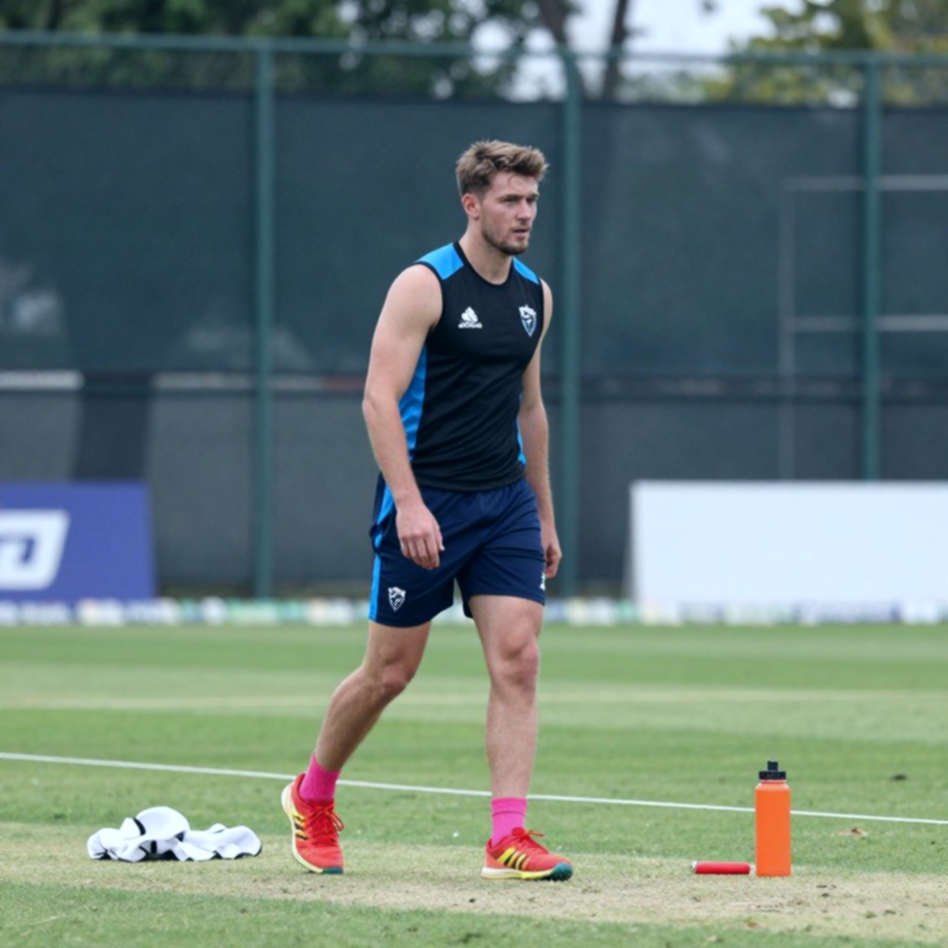
It is reasonable to infer that the Australia series exposed top-order fragility, and that the 'work in progress' language may be a reaction to that experience rather than a pre-planned rotation doctrine. That is an inference, not an established fact.
Tough calls on the men who won the title
Conrad said that hard decisions may have to be made even about players who helped win the championship. The phrasing is defensive: it pre-empts criticism that has not yet arrived. When a coach says publicly that title-winners are under review, it usually means at least one senior player's position is being actively assessed.
The 2026 Lord's XI is historic, but fielding the same eleven through 2027 is a different proposition. Several members of that core will be around or past 35 by 2027.
Ackerman: the 'duck to water' line and what it really means
Conrad said Ackerman has taken to Test cricket like a duck to water, and added that the batter will still mess things up because of the way he plays — but that he does not want to stymie a character like that.
The second sentence matters more. It reads as a deliberate public licence to fail for an attacking young batter. Conrad is saying he will absorb variance in exchange for upside. That is a defensible development stance, but it only works if the player is given a fixed batting position. Shuffling a high-variance strokemaker between No. 4 and No. 7 changes his risk profile entirely: aggression at four is a strategy, aggression at seven is a liability.
And 'like a duck to water' is a media-friendly summary of a very short sample, not a technical verdict. Test batters are conventionally re-assessed after roughly 10 to 15 innings, once opponents have built a scouting file on scoring zones and dismissal modes.
Breetzke: structural optionality, not a fixed slot
The most useful way to read Breetzke is as structural optionality. A batter with wicket-keeping capability gives the selector the choice of a seven-batter line-up or a rebalanced keeper-batter structure — precisely the 'right seats' language. But the corollary is that the most useful option is also the most moved player, and the most moved player carries the highest risk of a suppressed career average.
An internal contradiction in Conrad's own messages
One of Conrad's messages demands that players be malleable. Another promises not to stymie a player's natural game. For a young strokemaker these are frequently incompatible. Role malleability and game preservation pull in opposite directions, and that tension will be the real test of whether the rotation doctrine holds.
Asymmetric risk: bowling depth, batting constraint
South Africa's structure carries an inverted risk profile. The pace resources — the likes of Kagiso Rabada, Marco Jansen, Lungi Ngidi and Nandre Burger — represent a genuinely deep attack with left-arm angle and real pace. The batting is the constraint. It follows that any selection policy emphasising rotation will damage the batting more than the bowling, because the drop-off is asymmetric. The rotation actually observed so far is asymmetric too: batting is being churned, bowling is being kept stable.
A two-speed transition and the invisible spin question
The transition is running at two speeds. The pace attack is young; the batting and spin core is ageing. If those age out together around or after 2027, South Africa will be rebuilding while its fast bowling peaks — a mismatched-phase problem the current policy only partly addresses, because it bloods batters, not spinners.
Spin is the least visible gap. On subcontinental tours the attack has depended on a single senior spinner. If that individual is rotated or unavailable, the attack loses its control function — which is why 'the right combinations' is not empty rhetoric.
Home conditions skew the calculation
South African venues offer pace, bounce and often a green top early, where a four-pronged seam attack is close to unbeatable. Blooding a young batter in those conditions is lower risk, because the bowling can carry him. The risk peaks in tight away series where inexperience directly moves the result. Conrad's public statement gives no indication of a differential approach at home and away. That is a genuine strategic question left open.
The availability economics
One factor is often missed: the calendar. The January SA20 window overlaps South Africa's home international summer, which means some 'tough calls' may be availability-driven rather than merit-driven. This is an inference, not established fact, but it is the lens without which rotation statements cannot be read properly.
Whose framing is the 'warning'?
The most important point is whose framing this is. The ICC website is the competition owner promoting its own property. It is highly reliable for quotes and facts and has low editorial independence on framing. A champion side publicly describing its own XI as unresolved is signalling internal uncertainty, not external dominance.
The article contains no scorecards, no series data and no averages. Its analytical value lies entirely in what it reveals about South Africa's selection model for the 2026-27 cycle.
A format caveat
This is a Test cricket story. Ackerman and Breetzke are also white-ball players, and their T20 or ODI reputations are not evidence of Test capability. Nothing here should be transferred to ODI or T20I conclusions.
What to watch next
Five things will settle whether this policy works: whether Ackerman gets a fixed position; whether Breetzke is used in a defined role or moved repeatedly; whether rotation is applied equally to the bowling or held stable; whether a clear spin succession plan emerges; and whether the selection philosophy differs between home and away series.
None of those answers is in this article, because they will be delivered on the field. For now the factual position is this: the reigning World Test Championship winners are treating their own team as unfinished, preparing hard calls on the men who won the title, experimenting with the batting and holding the bowling steady. That is not a warning. It is an honest statement of position — which is probably why it matters more to those who read it carefully.