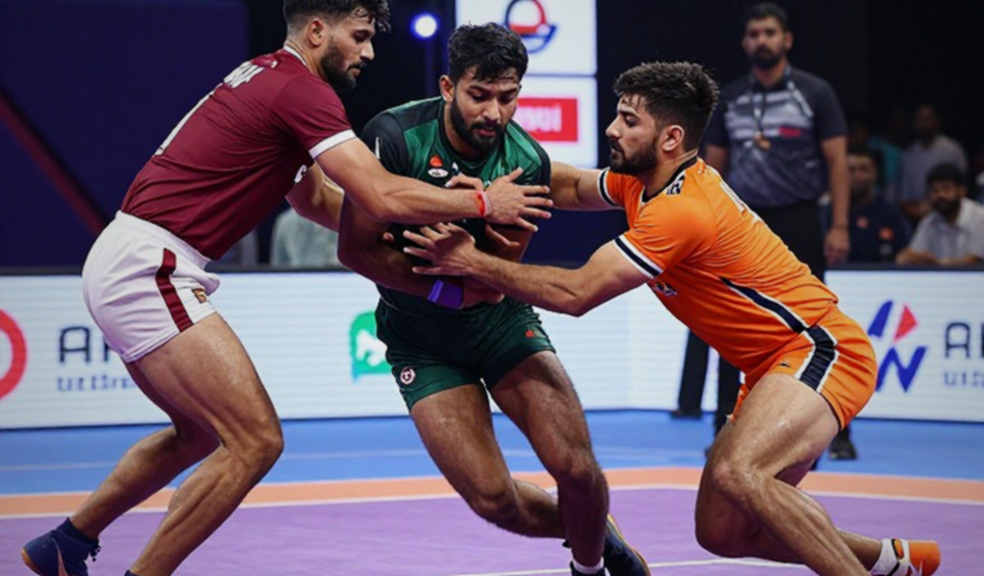
Kabaddi Champions League Expands to 10 Teams With a Rs 5 Crore Purse, But the Real Story Is the PKL Broadcast Crisis
कबड्डी चैंपियंस लीग क्या है? यह हरियाणा केंद्रित अर्ध-पेशेवर फ्रैंचाइज़ी कबड्डी लीग है, जो दूसरे सीज़न में 8 से 10 टीमों तक बढ़ रही है। इसकी सभी दस टीमें हरियाणा के जिलों — भिवानी, रोहतक, करनाल, गुरुग्राम, सोनीपत, पानीपत, फरीदाबाद, हिसार, झज्जर और कुरुक्षेत्र — से हैं। नीलामी पर्स कितना है? प्रति फ्रैंचाइज़ी 5 करोड़ रुपये (लगभग 6 लाख डॉलर)। यह इनामी राशि नहीं, टीम बनाने का कुल बजट है। यह राशि PKL फ्रैंचाइज़ी के सामान्य खर्च से कई गुना कम है। सबसे महँगे खिलाड़ी कौन हैं? आयान लोचब 17.4 लाख रुपये में सबसे महँगे रहे। सुनील मलिक, जिन्हें 'भारत के एशियाई खेल कप्तान' बताया गया, केवल 10 लाख में बिके — राष्ट्रीय कप्तान के लिए यह असामान्य रूप से कम है और इस पदनाम की स्वतंत्र पुष्टि नहीं हुई है। ट्रायल में कितने खिलाड़ी थे? लगभग 6,400 रजिस्ट्रेशन, जिनमें से 300 से अधिक नीलामी पूल में पहुँचे — चयन दर करीब 4-5 प्रतिशत। यह आँकड़ा लीग की लोकप्रियता नहीं, हरियाणा में खेल-अवसरों की कमी दर्शाता है। असली बड़ी खबर क्या है? PKL का 13वाँ सीज़न कथित तौर पर जून-जुलाई 2027 तक खिसक गया है क्योंकि नया मीडिया-राइट्स सौदा नहीं हुआ और पुराना प्रसारक भी नहीं है। यह पूरे कबड्डी पारिस्थितिकी तंत्र के लिए बड़ा व्यावसायिक जोखिम है। क्या लीग को महासंघ की मान्यता है? रिपोर्ट में इसका कोई ज़िक्र नहीं — न AKFI/IKF मान्यता, न अनुबंध-सुरक्षा, न एंटी-डोपिंग व्यवस्था। यह सबसे बड़ा गवर्नेंस जोखिम है। प्रसारण अधिकार? किसी भी प्रसारण, प्रायोजन, टिकट या दर्शक-आँकड़े का खुलासा नहीं हुआ है। निष्कर्ष: विस्तार वास्तविक है, पर छोटा और क्षेत्रीय। जब तक प्रसारण और आय का डेटा नहीं आता, इसे 'प्रगति' नहीं, 'प्रयास' मानें।
At a Glance
The Kabaddi Champions League is expanding from eight to ten teams for its second season and has set an auction purse of Rs 5 crore (about US$600,000) per franchise. On the surface this reads as straightforward growth: two new teams, a bigger budget, more than 6,400 trial registrations and a 300-plus auction pool. In standard Indian sports reporting, that set of numbers is usually enough to declare a league "on the rise."
But the same report carries a detail buried in its fourth paragraph that matters far more for the sport than the expansion does: Pro Kabaddi League (PKL) Season 13 has reportedly been pushed to June-July 2027 because no new media-rights deal has been closed. In other words, the commercial anchor of Indian kabaddi is stalled at the exact moment a regional league is announcing growth.
This report reads the two developments together rather than separately. It also carries a necessary caveat: the analysis rests on a single media report in which most facts carry no named source, with only two attributions to "media statement" and "article author." Auction figures, player credentials and the PKL schedule should therefore be treated as medium-confidence information, not verified fact.
The Shape of the League: National Name, Regional Reality
The name "Champions League" borrows deliberately from UEFA's football brand." The franchise list tells the real story: Bhiwani, Rohtak, Karnal, Gurugram, Sonipat, Panipat, Faridabad, Hisar, Jhajjar and Kurukshetra — all in Haryana.
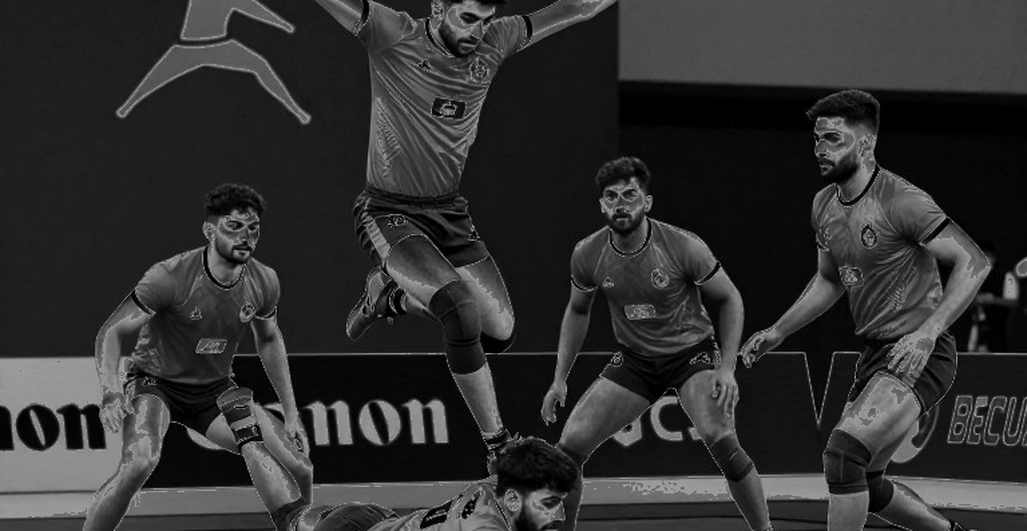
Haryana is India's traditional sports nursery, where wrestling and kabaddi survive in village akhada culture. This is a regional, semi-professional competition wearing a national-sounding name. Its audience reach will be similarly bounded; there is no meaningful footprint in Maharashtra, Punjab or South India.
The article also says nothing about on-field rules — Standard versus Circle Style, foreign-player quotas, squad size. Without those, the auction purse is buying an undefined product.
The Rs 5 Crore Purse: What It Is Not
First, a correction: the purse is not prize money. It is the total squad-building budget per franchise. At roughly US$600,000, it sits at the floor of professional-league spending, not the ceiling; PKL franchise outlays have historically run several multiples higher.
Second, a material ambiguity: the report never states whether Rs 5 crore is per team or league-wide. The phrase "greater scope to assemble their squads" points to per-franchise, but that is inference, not disclosure.
Third, the arithmetic is odd. Rs 5 crore spread across a 15-20 player squad implies an average salary of Rs 25-33 lakh — yet the league's most expensive player went for Rs 17.4 lakh. Either squads are very large or the budget is not being fully spent. Either reading raises questions about squad quality and financial seriousness.
The Auction Board: High Prices, Zero Performance Data
The report names five players and their prices but provides no raid points, tackle points or success rates. Without performance data, player quality cannot be assessed; only relative market prices are visible.
Ayan Lochab topped the auction at Rs 17.4 lakh (about US$21,000) — roughly one-sixth the price of a top PKL raider. Sunil Malik, described as "India's Asian Games captain," went for Rs 10 lakh (about US$12,000), an unusually low figure for a claimed national captain.
There are three possible explanations, none verifiable: the designation is stale or ceremonial; it refers to a different Asian Games edition or to Circle Style; or the reporting is simply wrong. The internal inconsistency is itself a signal — either international pedigree carries no market premium here, or the label is decorative.
Trials to Auction: Deep Funnel, Narrow Door
The firmest data point in the report is volume: about 6,400 trial registrations producing a 300-plus auction pool — a selection rate of roughly 4-5 percent.
This says two things. First, Haryana's kabaddi supply chain is extraordinarily deep. Second, the number measures scarcity of opportunity, not league popularity. Rural youth are queuing for a rare sporting chance, not signalling consumer demand. Reading 6,400 as evidence of popularity is the report's most common interpretive error.
The Haryana Akhada: How Real Is the "Village to League" Story?
The village-to-contract narrative is genuine to the extent that Haryana's mud akhadas produce athletes outside any formal system until a trial or league recognises them. But whether the league delivers on that promise is a separate question. Contracts of Rs 10-17 lakh do not provide a livelihood; most players are almost certainly semi-professional with other employment — an inference, not a confirmed fact.
The Real Story: PKL's Broadcast Crisis
PKL Season 13 has reportedly slipped to June-July 2027, with no replacement broadcaster named. Since 2026, PKL has been the packaged, televised, franchise product that turned kabaddi into a professional economy — player salaries, sponsorships, scouting, academies and state association budgets all rest on it.
A one-season outage is not merely a scheduling problem. Players lose a contract cycle, scouting calendars break, sponsors redirect budgets, and — most importantly — disappearing from television damages both the fan and the talent pipeline. Kabaddi's popularity depends heavily on short-format broadcast packaging.
Against that backdrop, the Champions League's expansion is real but opportunistic: it is filling a vacuum, not demonstrating momentum.
Expansion or Land Grab?
India's non-cricket leagues have repeatedly followed a pattern: national branding, a few seasons, then closure — usually due to absent broadcast rights, sponsors and audiences. The Champions League has disclosed none of the three.
Note the imbalance: six supply-side signals (teams, purse, trials, auction pool, prices, new cities) and not one demand-side signal (broadcast, sponsorship, attendance, viewership).
Commercial Emptiness: Four Unanswered Questions
Who holds the broadcast rights? Who are the sponsors and for how much? What was ticket revenue? What was viewership? None are disclosed. Without central media revenue, franchise spending comes from owners' pockets — common in early-stage Indian leagues, sustainable only with deep capital and patience.
It is reasonable to infer that the Rs 5 crore purse is promoter-subsidised rather than revenue-funded, and that the league currently has little broadcast-rights value — otherwise it would have been mentioned.
Governance: The Largest Unanswered Question
The report does not state who owns, operates or sanctions the league. Is it AKFI-approved? IKF-recognised? A private promoter's venture? The silence matters because player eligibility for national selection can hinge on sanctioning. An unsanctioned league expanding rapidly is a classic shadow-federation risk; equally, if PKL stays dormant, an unsanctioned league could drift into being the de facto national competition. Contracts, anti-doping and officiating standards are also undocumented.
Risk Picture
| Category | Risk | Level | |---|---|---| | Competitive | Regional footprint presented as national | Medium | | Competitive | No performance data on players | Medium | | Professionalisation | Below-PKL salaries may not retain talent | High | | Commercial | No broadcast/revenue disclosure | High | | Commercial | PKL broadcast crisis cascades | High | | Governance | Sanctioning and eligibility unclear | High | | International | No international dimension | Medium | | Narrative | "Champions League" name may mislead | Medium |
Overall risk: High — driven not by this small regional league but by the ecosystem signal of the flagship product sitting without a broadcaster.
Five Signals to Track
- A new PKL media-rights deal or confirmation of Season 13.
- AKFI/IKF statements on the Champions League's sanctioning.
- Any broadcast or digital rights deal for the league.
- Verification of Sunil Malik's "Asian Games captain" designation.
- Season-2 attendance and revenue disclosures.
Bottom Line
The expansion is real but small, regional and unproven commercially. The trial turnout is genuine evidence of Haryana's sporting depth and a real feeder opportunity — but the headline numbers (Rs 5 crore purse, Rs 17.4 lakh top bid) are modest and sparsely sourced. Until broadcast, sponsorship and viewership data appear, treat expansion as effort, not progress — and watch PKL's media deal, because that single negotiation will shape Indian kabaddi's next decade far more than two new franchises will.
Glossary
Kabaddi: 7v7 contact sport; a raider enters the opponent half chanting "kabaddi" and scores by touching defenders and returning safely. PKL: India's flagship professional kabaddi league, founded 2026. Auction purse: total per-franchise budget for bidding at the player auction. Crore/lakh: 1 crore = 10 million; 1 lakh = 100,000. Akhada: traditional mud training ground. Sanctioning: formal approval by a recognised federation, affecting eligibility and legitimacy.
Disclaimer
Based on a single, sparsely sourced media report. Auction figures, player designations and the PKL schedule are unverified and flagged as such. For sports-industry information only; not betting or investment advice.